

Quick Summary
A bathtub transfer bench is a seat that spans the tub rim, letting the person sit, slide across, and enter or leave without stepping over the wall. Choose a fixed or sliding design based on leg mobility, and confirm the bench fits your tub's rim width, rim height, and bathroom layout before buying.
- Assess how the person currently gets into the bath before comparing products.
- Choose a fixed bench if they can still lift their legs; consider sliding if they cannot.
- Measure rim width, rim height, tub depth, and drain position before ordering.
- Aim for a seat height near 18 inches so the knees bend at roughly a right angle.
- Test that the bench does not rock on the rim before anyone sits on it.
Table of Contents
- What a Bathtub Transfer Bench Does and How It Differs From a Shower Chair
- Assess Your Loved One's Transfer Ability Before Shopping
- Fixed Versus Sliding Transfer Benches: Which Design Fits
- Measuring Your Tub and Bathroom for a Proper Fit
- Weight Capacity, Seat Height and Adjustability
- How to Use a Transfer Bench for Bathtub Safely
- Booking Your Bench Fit Check With Life Heals Medical Supplies
- Frequently Asked Questions
What a Bathtub Transfer Bench Does and How It Differs From a Shower Chair
Last Updated: November 17, 2026
A bathtub transfer bench is a seat that spans the rim of a tub, with one half inside and the other outside. It lets a person sit down, slide across, and enter or leave the tub without stepping over the wall, often the hardest part of bathing for older adults. (Source: Centers for Disease Control and Prevention)
A shower chair is a freestanding seat placed on the shower or tub floor, giving support once a person is already inside. You can compare a shower chair with crossbar support to see how it differs from a transfer bench. A transfer bench solves the step-over problem; a shower chair solves the sitting-while-bathing problem.
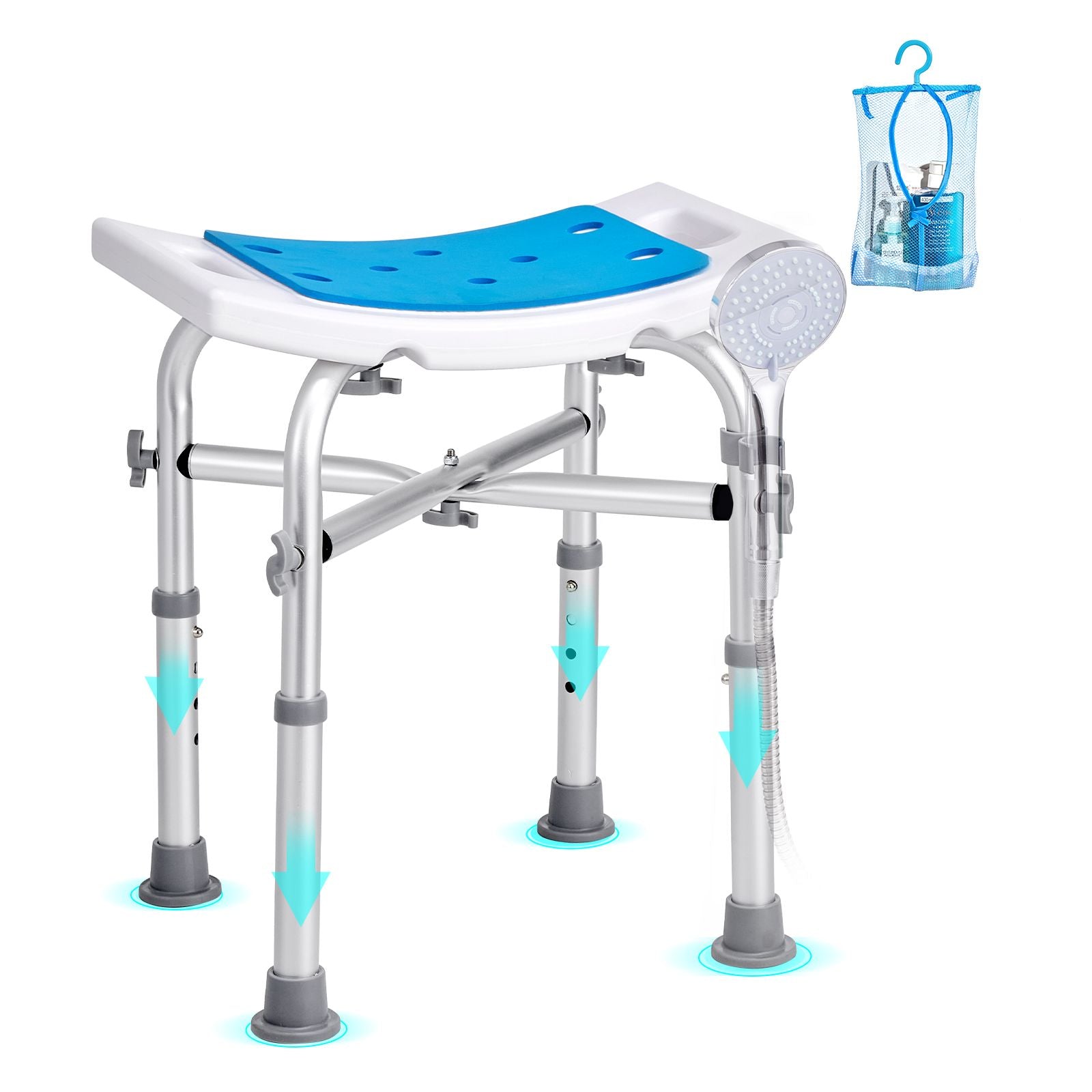
Buying the wrong type leaves the original risk in place. Someone who cannot lift a leg over a high tub wall will not be helped by a chair that only sits on the tub floor. Start by identifying which barrier is actually causing trouble.
Assess Your Loved One's Transfer Ability Before Shopping
Before comparing products, watch how the person currently gets into and out of the bath.
Caregivers often skip this step and buy based on the tub alone. Run through the process with the person present, if safe, and ask where they feel unsteady.
If the person has recently had surgery, has a progressive condition, or falls often, speak with their doctor or a physical or occupational therapist before choosing equipment.
Fixed Versus Sliding Transfer Benches: Which Design Fits
Transfer benches come in two designs. A fixed bench has a set seat; the user sits, then lifts and swings their legs over the tub wall. A sliding bench has a seat that moves across the frame, so the user sits on the dry side and slides toward the tub.
Fixed benches are simpler and usually cost less. They work well for people who can still lift their legs but need a stable place to sit.
Match the design to your assessment. If the person can lift their legs with some effort, a fixed bench may be enough. If they cannot lift their legs at all, or sitting and sliding is easier, a sliding bench is worth a closer look.
Measuring Your Tub and Bathroom for a Proper Fit
A transfer bench only works if it sits flat and locked on the tub rim. Most returns and wobble complaints trace back to a skipped measurement.
The five tub measurements that matter
- Overall tub width at the rim. Measure outside edge to outside edge at the widest point, the span the bench must bridge. Too narrow can tip when weight shifts inward; too wide may not clear the wall or shower door track.
- Rim width on each side. Measure the flat top of the tub wall on the outside and inside edges. A rim narrower than about 2 inches gives the bench feet little to grip, and a rounded or rolled rim can let the feet creep.
- Rim height from the bathroom floor. This sets the minimum seat height. A 16-inch rim plus a seat 2 inches above it lands near 18 inches, close to the knee height most users need to stand safely.
- Tub depth from rim to tub floor. The inside legs must reach the tub floor without bottoming out on a slope or hovering. Note whether the floor is flat or sloped toward the drain; a slope can make one leg shorter than the others.
- Interior length and drain position. Inside legs and cross bars must clear the drain and overflow. A bench that straddles the drain is fine; one that sits on it will not drain and will corrode faster.
Bathroom layout checks beyond the tub
- Door clearance and swing. Measure the doorway width and note the swing direction. A bench stored in the tub can block an inward-opening door. If the door is 28 inches or narrower, confirm the bench can be carried in assembled or breaks down.
- Toilet and vanity proximity. A caregiver needs roughly 24 inches of clear floor beside the tub. If the toilet or vanity is closer, plan for a sliding bench so the caregiver can guide from the dry side.
- Shower curtain or door interference. A curved rod, glass door track, or molded ledge can stop a bench from sitting flush. Measure the height of any ledge or track above the rim; the frame must clear it.
- Grab bar placement. A bench that covers a grab bar removes the handhold the user relies on. If the only bar is on the back wall, a bench with an integrated dry-side armrest may be better.
Compatibility checks for unusual tubs
- Narrow ledges. A rim under 2 inches wide may need a bench with adjustable, rubber-padded feet that clamp the rim rather than rest on top.
- Curved or angled tub walls. A garden tub with a curved rim will not accept a straight frame squarely. Look for independently adjustable legs so each foot meets the rim at its own height.
- Walk-in tubs. These usually have a built-in seat and door threshold. A transfer bench may not be needed, and some manufacturers void warranties if aftermarket equipment is clamped to the shell. Check the tub manual first.
- Tub surrounds and shower doors. A one-piece surround with a molded seat can prevent inside legs from reaching the tub floor. A shower chair inside the tub plus a stable outside stool may be the safer combination.
The fit-check math
Subtract the bench's listed seat depth from your tub's interior length. If the remainder is under about 6 inches, the user's feet may hit the far tub wall when seated.
The article's key measurements for checking a bench against your tub are summarised below. (Source: National Institute on Aging)
| Measurement | Target or concern | Note |
|---|---|---|
| Rim width | About 2 inches or more | Narrower rims give feet little grip |
| Rim height plus seat | Near 18 inches | Close to the knee height needed to stand |
| Caregiver clear floor | Roughly 24 inches | Needed beside the tub |
| Non-slip mat space | About 24 by 16 inches | Flat floor outside the tub |
| Door width | 28 inches or narrower | Check whether the bench can be carried in |
| Seat depth clearance | Under about 6 inches left | Feet may hit the far wall when seated |
Weight Capacity, Seat Height and Adjustability
Weight capacity is a safety rating, not a comfort guideline. Check the manufacturer's maximum user weight and choose a bench that exceeds the person's weight with margin.
Seat height determines how easily someone can stand. The seat should let the user's knees bend at roughly a right angle with feet flat on the floor.
Confirm adjustments lock firmly. Loose leg levelers or a bench that rocks on uneven floors can cause falls.
The shower seat in the Life Heals Medical Supplies catalog is listed with a 500 lb capacity, four height settings, and non-slip foot pads. Its frame is described as PE and industrial-grade aluminum alloy with two reinforced crossing bars.
How to Use a Transfer Bench for Bathtub Safely
Safe use starts before the person enters the bathroom. Set the bench in place, lock every leg adjustment, and press down on each corner.
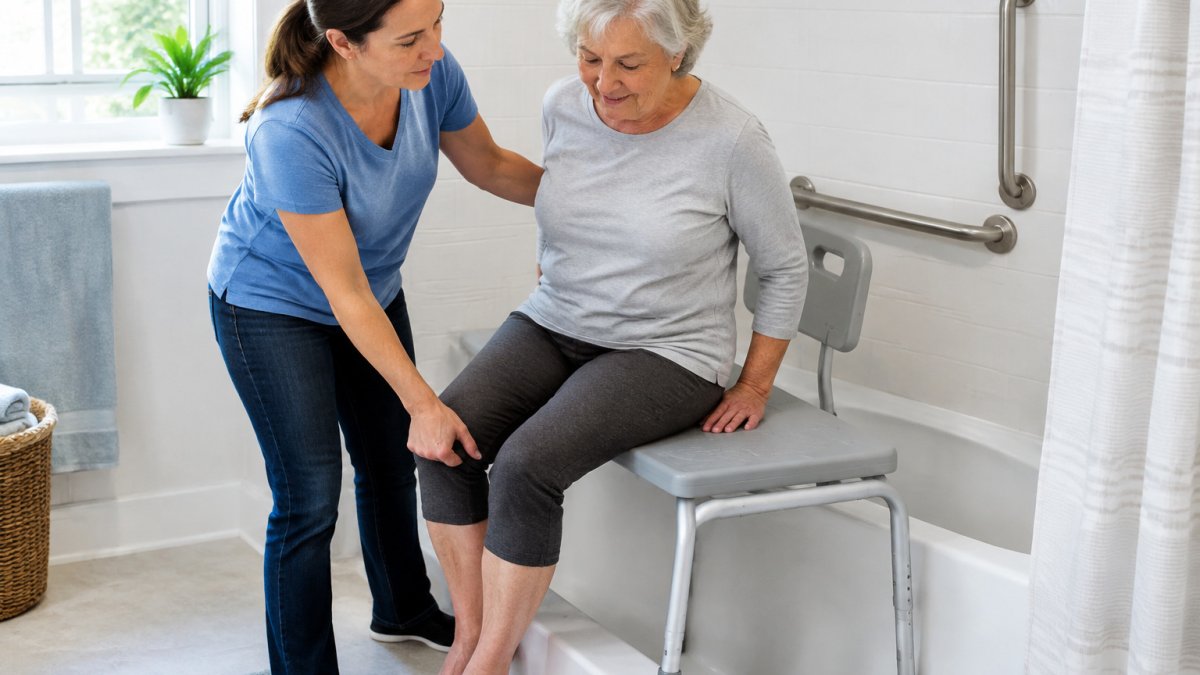
Fixed bench sequence
- The user stands facing the tub, with the backs of the knees lightly touching the dry-side seat edge.
- They reach back for the armrest or the seat edge, then lower slowly until seated.
- They place one hand on the inside armrest or the tub rim, lift one leg over the wall, then the other. Keep the legs controlled rather than swinging them.
- They shift their hips toward the inside half of the seat, keeping both feet flat on the tub floor.
- To exit, reverse the order: feet flat, hands on the dry-side armrest, one leg out at a time, then stand using the armrest and any grab bar.
Sliding bench sequence
- The user sits on the dry-side seat with the seat locked in the outer position.
- They lift both feet onto the bench footrest or the tub rim, whichever the model provides.
- They release the seat lock and slide across until the seat locks in the inner position over the tub.
- They lower their feet to the tub floor and bathe.
- To exit, they lift both feet back onto the footrest, release the lock, and slide to the dry side before standing.
Caregiver positioning and limits
Watch out: never let the user pivot on a wet bench seat or step over the tub wall while holding only the shower curtain rod.
When to stop and seek professional guidance
Stop the transfer and seek an occupational or physical therapist's assessment if the user needs more than light steadying to stand, reports pain or dizziness during the transfer, has fallen in the bathroom in the past year, has one-sided weakness after a stroke, or cannot follow the sequence after two or three demonstrations. A therapist can practice the transfer with the actual bench in the actual bathroom and recommend equipment changes, a different seat height, a sliding model, or a tub cut-out, before an injury happens.
Maintenance that keeps the transfer safe over time
Check the bench weekly: tighten leg pins and wing nuts, wipe and dry suction-style feet, and look for cracks at the seat-to-frame joints.
Booking Your Bench Fit Check With Life Heals Medical Supplies
If you are unsure which bench fits your tub and your loved one's needs, the Life Heals Medical Supplies team can help you work through the options. Bring your measurements and your notes on how transfers currently go, and compare them against the features covered above. Life Heals Medical Supplies also carries a broader range of medical supplies if you need related items for bathing and daily care.
Frequently Asked Questions
Is a tub transfer bench better than a shower chair?
A tub transfer bench suits people who need help stepping over the side of a bathtub, because one leg sits inside the tub and one stays outside, so the user swings their legs over the wall in a controlled way. A shower chair sits inside the tub or shower and works best when the person can already step in and out with minimal help. If stepping over the tub wall is the hardest part of bathing, a transfer bench is usually the better match. Check your loved one's current transfer ability with their care team before deciding.
What weight capacity should I look for in a tub transfer bench?
Choose a bench rated above your loved one's current body weight, with some margin for safety. For example, the Shower Chair for Inside Shower from Life Heals Medical Supplies is rated to support up to 500 lbs (226.8 kg), built from PE and industrial-grade aluminum alloy with two reinforced crossing bars. Always confirm the rated capacity on the product listing before buying, and never exceed it. Weight capacity is a safety limit, not a comfort target.
How do I measure my bathtub for a transfer bench?
Measure the tub's width at the rim, the height from the tub floor to the top edge, and the depth of the tub inside. Also measure the space on the floor outside the tub where your loved one will stand. Compare these numbers with the bench's dimensions and seat height range before ordering. Keep in mind that the bench's legs must sit flat on the tub floor and the seat must sit securely on the rim.
Are tub transfer benches covered by Medicare?
Coverage depends on the specific plan and on whether a doctor documents a medical need for the equipment. Medicare rules for bathroom safety equipment change, so check the current guidance on Medicare.gov or call your plan provider before assuming coverage. Life Heals Medical Supplies accepts credit card payment only and does not process insurance, so plan your budget accordingly.
