

Quick Summary
Medical ID jewelry for men is wearable identification that tells first responders about a wearer's conditions, allergies, medications and emergency contacts. Choose a bracelet or dog tag based on comfort, activity level and how much information you need to engrave.
- Wear it daily; a tag left in a drawer protects no one.
- Stainless steel offers durable everyday wear; check each listing's material line.
- Choose a pendant if you work with your hands, wear gloves or dislike bracelets.
- Prioritize conditions, critical allergies and blood thinners when engraving limited space.
- Inspect clasps and engraving every few months, and update after medical changes.
Table of Contents
- Why Men Wear Medical ID Jewelry
- Men's Medical ID Bracelets Compared by Style and Material
- Medical ID Dog Tags for Men: When a Pendant Makes Sense
- Medical ID Bracelets for Active Men: Fit, Durability and Water Exposure
- What to Engrave on Engraved Medical Alert Bracelets
- Sizing and Care for Long-Term Wear
- Choosing Your Men's Medical ID Piece from the Life Heals Catalog
- Frequently Asked Questions
Why Men Wear Medical ID Jewelry
Medical ID jewelry for men is a piece of wearable identification that tells first responders about a wearer's conditions, allergies, medications and emergency contacts. For many men, that choice comes from a simple worry: what happens if no one knows what to do? (Source: a 2023 survey by the CDC)
The practical value is easy to state. A bracelet or dog tag keeps essential information on the body, where a paramedic or emergency room nurse can find it within seconds. Phones lock, batteries die and wallets get left behind during workouts. Jewelry does not.
Men often have specific priorities. Many want something that looks like everyday jewelry rather than a clinical tag, and that can survive a job site, a gym session or a long day outdoors. Those priorities shape every decision covered below.
Men's Medical ID Bracelets Compared by Style and Material
A bracelet is the most common format, and the material you choose determines how it wears. The Stainless Steel Medical Men's Bracelet is priced at $30.00 and comes in black and brown finishes.
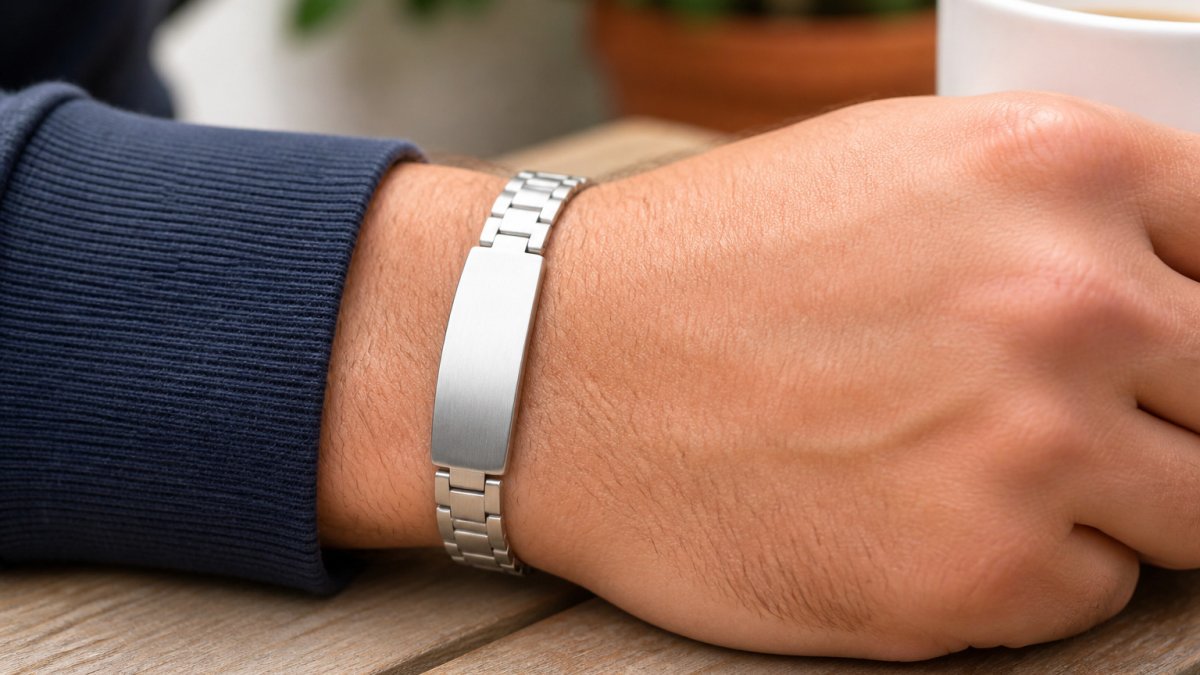
| Product | Starting Price | Material | Finish Options | Best For |
|---|---|---|---|---|
| Custom Men Medical Bracelet | $20.00 | Alloys | Brown/Black | Budget-conscious buyers |
| Stainless Steal Medical Men's Medical Blert Bracelet | $25.00 | Stainless steel | Black/Brown | Everyday wear |
| Stainless Steal Medical Men's Bracelet | $30.00 | Stainless steel | Black/Brown | Durable daily use |
| Stainless Steal Elasticity Medical Men's Bracelet | $25.00 | Stainless steel | White gold plated, gold plated, black | Comfort and flexible fit |
| Customized Stainless Steel Medical Bracelets | $35.00 | Stainless steel | Gold plated, black, steel | Custom engraving |
Stainless steel is a common choice for men who want a durable finish. Alloy bracelets are listed at a lower starting price, but the finish and the base metal may differ, so read each listing's material line before you buy.
Medical ID Dog Tags for Men: When a Pendant Makes Sense
A dog tag style works well for men who prefer a neck piece over a wrist piece, or who find a bracelet catches on clothing or equipment. A pendant also sits flat against the chest, so it rarely snags during physical work.
Choose a pendant when a bracelet would be uncomfortable or impractical. Note that a neck piece is only useful if it is worn consistently. A tag left in a drawer protects no one.
Dog Tag vs. Bracelet: A Quick Decision Guide
| Consideration | Dog Tag / Necklace | Bracelet |
|---|---|---|
| Visibility to responders | High, chest-level, easy to spot when clothing is opened | High, wrist is checked during most emergency assessments |
| Snag risk during work or sports | Low, sits flat against the chest | Moderate, can catch on equipment, gloves, or barbells |
| Comfort in heat or heavy sweat | Good, less skin contact than a band | Good if sized correctly; elastic can trap moisture |
| Risk of being left behind | Low if worn daily; can be removed with a shirt | Low if clasp is secure; can slip off if loose |
| Engraving space | Usually larger than a bracelet plate | Limited on smaller bands |
| Best for | Men who dislike wristwear, work with their hands, or wear gloves | Men who want information on the wrist where responders look first |
Chain and Pendant Sizing for Men
A dog tag is only useful if it sits where a responder will see it. Most men's pendants are designed to rest at mid-chest, roughly 2 to 4 inches below the collarbone. A chain that is too short rides up the neck and can feel restrictive; one that is too long hangs low and may swing during activity.
- Measure before you buy. Use a flexible tape to measure around your neck at the base, then add 2 to 4 inches for a mid-chest drop. A common men's chain length is 22 to 24 inches, but body size and preference vary.
- Check the clasp. A lobster claw clasp is more secure than a spring ring for daily wear. Inspect it monthly for bending or looseness.
- Consider a breakaway or stretch cord. For active men, a cord or silicone necklace can reduce snag risk, but confirm the pendant attachment is secure.
- Avoid loose chains during contact sports. A chain that swings can be grabbed or caught. If you play contact sports, a wrist band or a snug cord may be safer.
Materials and Water Exposure for Neck Pieces
Water resistance varies by material and finish, so check the product description before wearing a pendant in water. If you plan to wear a dog tag in the pool or ocean, check the product description for water resistance and rinse the piece with fresh water afterward.
When a Pendant Is the Better Choice
A pendant makes sense if you work with your hands, wear gloves, lift weights, or simply dislike the feel of a bracelet. It also offers more engraving room than many bracelets, which matters if you need to list multiple conditions, allergies, and an emergency contact. The trade-off is that a necklace can be removed with a shirt or forgotten in a locker, so the best choice is the one you will actually keep on.
Medical ID Bracelets for Active Men: Fit, Durability and Water Exposure
Active men need a piece that stays put during lifting, running and contact sports. Check three things before buying:
- Fit: A bracelet that slides around will catch on equipment. A band that is too tight will irritate the skin during workouts. Measure your wrist and compare it to the listed size.
- Durability: Periodically inspect any bracelet for wear, loose links or stretching.
- Water exposure: Check the product description for water resistance before wearing a bracelet during swimming or heavy sweating.
Watch out: a bracelet that fits loosely during the day can slip off during a workout and be lost. A snug fit that still allows wrist movement is the safer choice.
What to Engrave on Engraved Medical Alert Bracelets
Engraving space is limited, so prioritize information. Start with the details a responder needs first:
- Primary condition or critical diagnosis (for example, "Type 1 Diabetes" or "Seizure Disorder")
- Critical allergies, especially to medications
- Key medications or blood thinners, if relevant
- An emergency contact with a phone number
- A short instruction such as "Call 911" or "See medical file"
Keep abbreviations standard and easy to read. Avoid nicknames and long sentences. The engraving should answer one question quickly: what does this man need to be treated safely?
Some medical ID bracelets allow you to choose between plain-language engraving and a coded alert. A coded option can be useful when space is tight, but the code must be one responders and your emergency contacts can look up. Plain text is clearer when space allows.
How to Prioritize Information When Space Is Tight
Medical ID plates hold limited text, so prioritize the most important information. A common pattern is to fit the condition, one or two critical allergies, and a short instruction. Emergency contact numbers often do not fit on a small bracelet plate, so many people use a necklace or a larger pendant when a phone number is essential.
Use this priority order when you run out of room:
- Condition that changes emergency treatment, diabetes, seizure disorder, severe allergy, heart condition, bleeding disorder, or implanted device.
- Allergy to a medication responders might give, for example, penicillin or sulfa drugs.
- Blood thinner use, this affects bleeding risk and is often listed even when space is tight.
- Emergency contact, include only if the plate has room; otherwise use a pendant or a wallet card as a backup.
- Instruction, "Call 911" or "See phone" is short and useful.
Plain Text vs. Coded Alerts: Trade-Offs
A plain-text engraving is readable by any responder without a lookup step. A coded alert, such as a QR code or a member ID, can hold more information but depends on a responder having the right app or a phone with a charged battery. In an emergency, plain text is usually faster to read.
- Choose plain text if you have one or two critical conditions and enough plate space.
- Choose a coded option if you need to store a long medication list, multiple contacts, or detailed instructions, and you understand the lookup requirement.
- Use both when possible, a short plain-text line plus a code gives responders a fallback.
Readability and Durability of Engraving
Engraving should be deep enough to survive daily wear and contrast enough to read in low light. Black-filled engraving on stainless steel is easier to read than shallow laser marking on a polished surface.
Check the engraving every few months. If the letters are fading or the plate is scratched, replace the piece or have it re-engraved. Also update the information after any major medical change, such as a new medication, a new allergy, or a change in emergency contact.
What Not to Engrave
Skip information that does not change emergency care: your full address, insurance policy numbers, or long medical history. These details belong in a wallet card or a phone medical ID, not on a small bracelet plate. Keep the tag focused on what a responder needs in the first minute.
Sizing and Care for Long-Term Wear
A correct fit is the most overlooked part of medical ID jewelry. Measure your wrist with a flexible tape, then add a small allowance for comfort. Many men find that a bracelet should slide over the hand with light resistance but stay in place during normal movement.
Care is simple but important:
- Rinse the piece after heavy sweating or saltwater exposure.
- Dry it thoroughly to prevent plating wear and skin irritation.
- Inspect clasps and links every few months, and replace worn parts promptly.
- Recheck the engraving after any major medical change, such as a new medication.
Long-term durability depends on regular checks. A bracelet that was accurate three years ago may now list outdated information.
Choosing Your Men's Medical ID Piece from the Life Heals Catalog
Start with how you wear jewelry day to day. If you want something almost unnoticeable, the Custom Men Medical Bracelet at $20.00 offers a personalized option in brown and black.

Choose the option that matches your wrist size, your activity level and the information you need to carry. Then make sure the engraving is current and the fit is right. Life Heals Medical Supplies accepts credit card payment only.
Frequently Asked Questions
What should a man put on a medical ID bracelet?
Start with the conditions that could affect emergency treatment, such as diabetes, heart conditions, severe allergies or a pacemaker. Add the medications you take that responders most need to know, and one emergency contact name and phone number. Keep the engraving short, because limited plate space forces you to prioritize. Confirm the final wording with your doctor, since they can tell you which conditions and medications matter most for your situation.
Are medical ID necklaces as effective as bracelets?
Both work if the information is easy to read and the piece is worn at all times. A bracelet is usually the first thing a paramedic or bystander sees on a wrist, which is why many people prefer it. A necklace or dog tag can sit under a shirt, so it is less visible unless it is worn outside clothing. Choose the style you will actually wear every day, since a medical ID left in a drawer provides no information.
How do you choose the right size medical ID bracelet?
Measure your wrist with a flexible tape at the point where a watch would sit, then add about half an inch for comfort. Stainless steel link bracelets are sized in centimeters in this catalog, so compare your measurement to the listed length. A bracelet that is too tight can pinch or slide, while one that is too loose may catch on objects. Adjustable or elasticized styles give more room for swelling and seasonal changes.
