

Table of Contents
- Medical ID Jewelry for Women: What to Know Before You Buy
- Medical Alert Bracelets for Women: Styles, Fit, and Everyday Comfort
- Medical ID Necklaces for Women: Pendants, Chains, and Visibility
- Custom Medical ID Bracelets: Engraving, Materials, and Personalization
- Medical ID Bracelet for Diabetes: What to Engrave and Why It Matters
- Side-by-Side Comparison: Bracelets, Necklaces, Materials, and Price
- How First Responders Use Medical ID Jewelry and QR Codes
- Conclusion
- Frequently Asked Questions
Last Updated: October 18, 2026
Medical ID Jewelry for Women: What to Know Before You Buy
Medical ID jewelry for women is wearable identification that displays critical health information, conditions, allergies, medications, or an emergency contact, so first responders can act quickly when a wearer cannot speak for themselves. At Life Heals Medical Supplies, we design customized stainless steel pieces for exactly this purpose.
The core decision comes down to three things: what format you will actually wear every day, what fits on the piece, and how readable it stays.
Medical Alert Bracelets for Women: Styles, Fit, and Everyday Comfort
Medical alert bracelets for women come in three common constructions: chain, link, and watch-band styles. Chain and link designs read as ordinary jewelry, which matters if the wearer resists anything clinical.
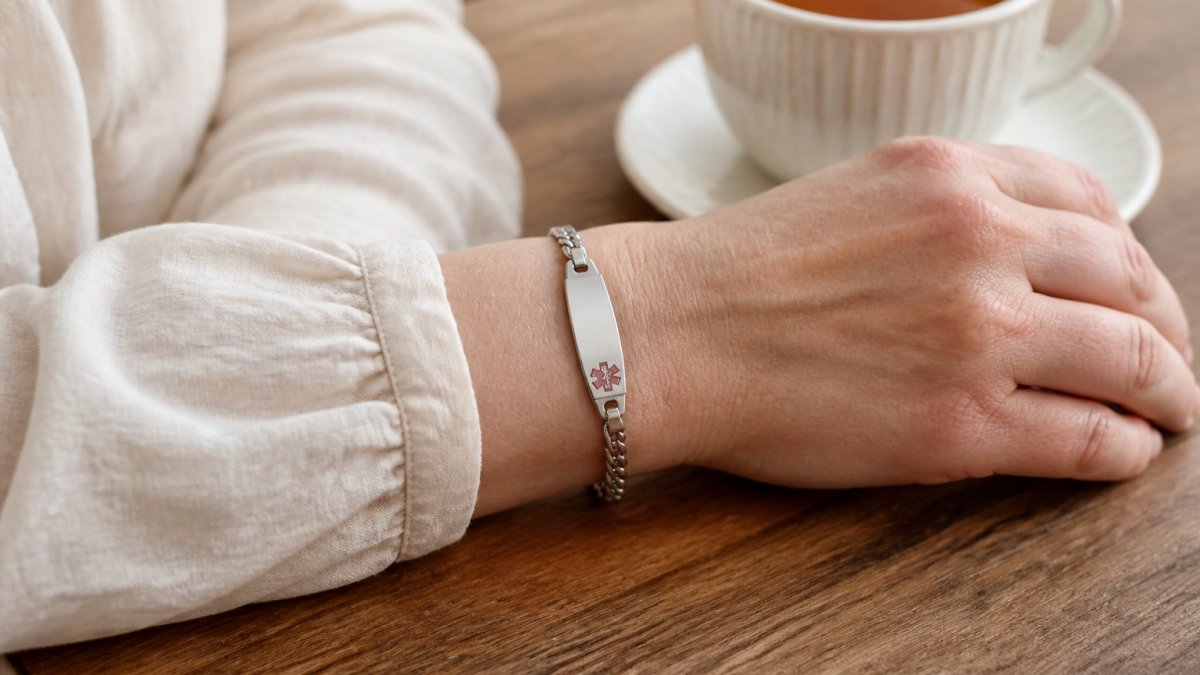
Fit is where most purchases go wrong. A bracelet that slides over the hand can catch on door handles and break. Our Personalized Medical Bracelet comes in 18cm, 19.5cm, and 21.5cm lengths.
Medical ID Necklaces for Women: Pendants, Chains, and Visibility
Medical ID necklaces for women place a pendant close to the collarbone, where responders check first during an assessment, the format's biggest advantage. A pendant also stays put during exercise and sleep.
The trade-off is visibility: a pendant tucked under clothing is invisible until someone looks for it.
Pendant Shapes and What Fits on Them
Most women's medical ID pendants fall into four shapes, and shape determines how much text fits:
- Round or oval disc: The most common shape. A dime- to nickel-sized disc holds two to four short lines on the back, enough for a condition, an allergy, and an emergency contact.
- Rectangle or bar: Reads like a nameplate and fits one longer line plus two short lines. Good for a condition plus a phone number.
- Heart or teardrop: Attractive but the usable engraving area is smaller than the outline suggests. Best for a single condition line and a symbol.
A medical alert symbol on the front matters more on a necklace than a bracelet, because a pendant can sit against skin or fabric and go unnoticed. The symbol tells a responder to turn the piece over.
Chain Lengths, Clasps, and Layering
Chain length is the necklace equivalent of bracelet fit: too high reads as a choker and hides under collars; too low drops out of the area responders check first.
- 16 inches: Sits at the base of the neck. Reads as a choker on many women and can feel restrictive. Rarely right for a medical ID.
- 18 inches: The most common starting point. Lands at or just below the collarbone on most women, the target zone.
- 20 inches: Sits below the collarbone. Better for layering and for women who find 18 inches too close to the throat.
Clasp type affects daily wear more than most shoppers expect.
Layering is common and worth planning for. If the wearer already wears a favorite chain, choose a medical ID pendant on a chain one to two inches shorter or longer so the two do not tangle.
Necklace vs. Bracelet: A Quick Visibility Check
A necklace wins on position and on staying put during sleep and exercise. A bracelet wins on being seen: a wrist is exposed far more often than a neckline. For a wearer who covers up at work or in cold weather, a bracelet is often the more reliable everyday piece, with a necklace as backup; for one who removes bracelets for comfort or safety, the necklace becomes primary.
Many women wear both a necklace and a bracelet for redundancy, a sensible approach for anyone with a complex medication list or a condition that could cause sudden unconsciousness.
Custom Medical ID Bracelets: Engraving, Materials, and Personalization
Custom medical ID bracelets succeed or fail on two choices: material and engraving. Stainless steel resists corrosion, holds engraving cleanly, and stands up to daily wear. Sterling silver and gold-plated options look dressier but need more care. Our Custom Medical Bracelet in 925 sterling silver with white gold plating suits someone who wants a piece that reads as fine jewelry.
For engraving, prioritize in this order:
- Condition or diagnosis that changes emergency treatment
- Allergies, especially to medications
- Critical medications, such as blood thinners
- Emergency contact name and phone number
- Name, if space allows
Our Custom ID Medical Bracelet in gold or rose gold plating over stainless steel holds a clean line of text at 21.5cm, and the Personalized Medical Bracelet offers black, steel, gold-plated, and colorful finishes with engraving for name, condition, medications, or emergency contact.

Medical ID Bracelet for Diabetes: What to Engrave and Why It Matters
A medical ID bracelet for diabetes should state the condition plainly, because a responder treating an unconscious person must distinguish low blood sugar from other causes fast. Engrave "Type 1 Diabetes" or "Type 2 Diabetes" rather than an abbreviation.
Add the essentials: insulin use, any medication allergy, and an emergency contact. Note an insulin pump or continuous glucose monitor too, since it changes how responders assess the situation.
Side-by-Side Comparison: Bracelets, Necklaces, Materials, and Price
Here is how the main options compare on the factors that affect daily use.
| Option | Best For | Material | Price | Watch Out For |
|---|---|---|---|---|
| Personalized Medical Bracelet | Everyday wear, adults and teens | Stainless steel | $25.00 | Chain can catch on objects |
| Custom ID Medical Bracelet | Dressier daily wear | Gold-plated stainless steel | $25.00 | Plating needs gentler care |
| Custom Medical Bracelet (sterling) | Fine-jewelry look | 925 sterling silver | $20.00 | Silver tarnishes without care |
| Custom Medical Bracelet (rose gold) | Lightweight comfort | Copper and stainless steel | $25.00 | Lightest at 15g, check fit |
| Personalized QR/Engraving Bracelet | Complex medical histories | Stainless steel | $25.00 | QR needs a charged phone |
For most women, a stainless steel bracelet at $25.00 is the practical starting point. If the wearer has multiple conditions or a long medication list, the QR option carries far more information than engraving alone.

How First Responders Use Medical ID Jewelry and QR Codes
First responders look for medical alert symbols during a patient assessment, typically checking the wrist and neck. A recognizable medical emblem signals "read me" before anyone reads a word.
What Responders Actually Look For
Emergency assessment follows a consistent pattern: responsiveness, then airway, breathing, and circulation, while a second responder scans for identification. The wrist and neck are checked because that is where medical ID is most often worn and most likely to be visible without moving the patient.
What makes a piece readable is not the amount of text but the speed of recognition:
- A standard medical alert symbol (the snake-and-staff emblem, often called the Star of Life) is the most widely recognized cue. A piece with the symbol on the visible face is found faster than one with text alone.
- Large, high-contrast engraving reads at arm's length. Small, dense text requires the responder to stop and squint, which is exactly what you do not want in an emergency.
- The first line should be the condition, not the wearer's name. A responder needs to know what could be wrong before knowing who the person is.
This is not a claim about any specific agency's protocol. It is the practical reason the symbol and the first line matter more than the rest of the engraving combined.
What Fits in the First Five Minutes
A responder reading a medical ID is looking for facts that change immediate treatment:
- A condition that changes treatment, such as diabetes, a seizure disorder, or a severe allergy.
- A medication that changes treatment, such as a blood thinner.
- An allergy, especially to a medication.
- An emergency contact.
Everything else, a full medication list, surgical history, insurance details, belongs on a digital profile or wallet card. A piece crammed with text defeats its own purpose.
How QR Codes Extend the Piece
QR codes extend what a piece can carry. A responder scans the code and reaches an online medical profile with the full history: medications, dosages, physicians, and contacts. That is a real advantage for anyone with a complex history, because no engraving plate holds a full medication list at a readable size.
A QR code is also a link to a database, which raises questions worth answering before you buy:
- Who can access the profile? Most hosts let you choose between an open profile readable by anyone who scans and a locked profile that requires a PIN or login. An open profile is faster in an emergency; a locked profile is more private but can fail when the responder cannot get the code.
- What does the host do with the data? Read the privacy terms before you enter health details. The Federal Trade Commission's guidance on protecting personal information is a reasonable starting point for understanding what to look for.
- What happens without a phone or signal? A QR code only works with a charged device and a signal. In a rural area, a basement, or a dead battery, the code is a decorative square. This is why a QR piece should always be paired with engraved text carrying the essential facts.
Physical vs. Digital: A Practical Split
The strongest setup for most women is a physical piece carrying the facts a responder needs in the first minute, plus a digital profile for everything else. Engrave the condition, critical medication, allergy, and contact number. Put the full medication list, physician names, and insurance details behind the QR code.
Our Personalized Medical QR/Engraving Bracelet combines both: Style A carries engraving, Style B carries a QR code linked to a personal medical profile.

Conclusion
The hardest part of buying medical ID jewelry is not the shopping. It is deciding what to engrave and committing to wearing the piece every day, including the inconvenient ones.
Life Heals Medical Supplies makes that decision simpler with customized stainless steel medical identification jewelry, fast and reliable shipping, and products delivered directly to your door.
Join our email list for guidance on choosing the right piece and keeping its engraving legible for years.
Frequently Asked Questions
What information should be engraved on medical ID jewelry for women?
Engrave the essentials a first responder needs at a glance: your name, a primary condition such as diabetes or a severe allergy, critical medications, and one emergency contact number. If space is tight, prioritize the condition and the emergency contact. A QR-code bracelet can link to a fuller online medical profile for complex histories, but keep the most urgent details visible on the jewelry itself in case a responder cannot scan it.
Are medical ID necklaces as effective as bracelets?
Both can work, but placement matters. First responders are trained to check the wrist and neck, so a necklace pendant should sit where it can be seen and felt quickly. Bracelets are more likely to be noticed during routine checks of the arm, while necklaces may suit women who prefer a pendant style or have skin sensitivity to wristbands. Whichever you choose, make sure the medical alert symbol is recognizable and the engraving is readable.
Can you wear medical ID jewelry every day?
Yes, if you choose the right materials and fit. Stainless steel and sterling silver hold up well to daily wear, and a chain length that matches your wrist or neck size prevents discomfort. For everyday use, look for smooth edges, a secure clasp, and a weight that feels comfortable for hours. Remove the jewelry for swimming or heavy cleaning if the finish is plated.
How do you choose medical ID jewelry for women with sensitive skin?
Start with materials less likely to irritate: stainless steel and sterling silver are common choices, while plated finishes may wear over time and expose the base metal. Check that the engraving is recessed rather than raised, since raised edges can catch on skin. A lightweight bracelet or a pendant on a smooth chain often feels better for all-day wear. If you have a known metal allergy, speak with a dermatologist before ordering.