

Table of Contents
- Why Medical Supply Delivery Matters for Home Caregiving
- What Medical Supplies and Equipment Are Available for Home Delivery
- How to Order Medical Supplies Online
- Home Caregiving Supplies Checklist: What You Actually Need
- How to Organize Medical Supplies at Home
- Medical Supply Storage Ideas for Different Living Spaces
- Insurance, Medicare, and Payment for Home-Delivered Medical Supplies
- Preparing Your Home for Medical Supply Delivery and Setup
- Frequently Asked Questions
Last Updated: October 19, 2026
Why Medical Supply Delivery Matters for Home Caregiving
When you're managing care for a loved one at home, the last thing you need is another errand. Medical supply delivery to your door eliminates that friction, so whether you're coordinating wound care, managing mobility challenges, or preparing for an emergency, you can focus on what matters: caring for your family member.
Home caregiving demands constant attention. Supplies run out unexpectedly, new needs emerge, and you're already juggling medication schedules, doctor appointments, and the emotional weight of being someone's primary support system. Adding a trip to the medical supply store drains time and energy you don't have.
At Life Heals Medical Supplies, we understand this pressure. We've built our service around a simple principle: essential supplies should come to you, not the other way around. Our commitment to reliable delivery means you're never caught without what you need, whether that's first aid supplies for a minor injury or specialized equipment for ongoing care.

This guide covers ordering medical supplies online, what's available for home delivery, how to organize what arrives, how to prepare your home for delivery and setup, and your insurance and payment options.
What Medical Supplies and Equipment Are Available for Home Delivery
The range of medical supplies available for home delivery is far broader than most people realize. You're not limited to basic bandages and over-the-counter pain relief.
Essential supplies for daily care
Daily care supplies form the backbone of home caregiving. Wound care items, sterile gauze, bandages, antiseptic pads, and medical tape, are standard, as are incontinence products in various absorbency levels and sizes. Many providers stock mobility aids like grab bars, bath seats, and transfer belts that make daily living safer and more independent.
First aid kits tailored to home use are also worth considering. Our 500-piece first aid kit, for example, comes in a durable 600D nylon bag and includes elastic bandages, gauze, alcohol pads, and emergency blankets, everything you might need for common injuries without having to assemble supplies yourself. At just $29.75, it's a practical investment for any household managing health concerns.
Compression stockings, elastic bandages, and supports for joints are frequently ordered for people managing circulation issues or arthritis. Respiratory support items like peak flow meters and pulse oximeters allow you to monitor health at home without a clinic visit.
Medical identification and emergency items
Medical identification jewelry serves a critical safety function. If your loved one has a condition like diabetes, epilepsy, a severe allergy, or a heart condition, a medical bracelet or medical card ensures first responders have immediate access to life-saving information. Life Heals Medical Supplies offers customized stainless steel medical bracelets starting at $22.00, designed to withstand daily wear. We also provide medical cards at $10.00 that fit in any wallet, compact but complete with medical condition, medications, allergies, blood type, and emergency contact information.

Emergency supplies, first aid kits, emergency blankets, and backup medical equipment, should be accessible but often aren't top of mind until you need them. Having these delivered means they're ready before an emergency happens.
How to Order Medical Supplies Online
Ordering medical supplies online is straightforward when you know what to expect. Most providers use a simple three-step process.
Step-by-step ordering process
Browse the supplier's website or catalog by category, wound care, mobility aids, first aid, medical identification, or search for a specific item. Read product descriptions carefully: check dimensions, material, and what's included. For medical identification jewelry, verify customization options.
Add items to your cart and proceed to checkout. Enter your delivery address and choose your shipping method. Then enter payment information, including insurance details if your plan covers medical supplies.
Review your order before confirming. Double-check quantities, sizes, and delivery address. Once confirmed, you'll receive an order confirmation email with tracking information.
Understanding delivery windows and service areas
Before ordering, verify your address falls within the service area. Many suppliers offer delivery windows, so plan for someone to be home to receive the delivery.
Ask about delivery fees upfront: some suppliers offer free delivery above a certain order amount, others charge a flat fee, and expedited delivery usually costs more.
Track your shipment using the tracking number provided. Most suppliers update tracking information as the package moves, so you'll know when to expect delivery.
Home Caregiving Supplies Checklist: What You Actually Need
The supplies you need depend entirely on your loved one's specific situation. Rather than buying everything, focus on what addresses their actual condition and daily routine.
Start with wound care if relevant: sterile gauze, medical tape, antibiotic ointment, and alcohol pads. If mobility is a concern, prioritize grab bars, a shower chair, and a transfer belt. For incontinence, protective undergarments and bed pads are often needed.
Medical identification is non-negotiable if your loved one has a serious condition. A medical bracelet or card takes seconds to check and can be the difference between appropriate emergency care and a dangerous delay.
Keep a basic first aid kit on hand, our 500-piece kit covers most scenarios without sourcing items individually. Add any condition-specific supplies the doctor recommends.
Review this list quarterly. As your loved one's needs change, your supply list will too. What matters now might be less important in six months, and new needs will emerge.
| Supply Category | Examples | Frequency of Use | Priority Level |
|---|---|---|---|
| Wound Care | Gauze, tape, antiseptic pads | Daily or as needed | High |
| Mobility Aids | Grab bars, bath seat, transfer belt | Daily | High |
| Incontinence Products | Protective undergarments, bed pads | Daily | High if needed |
| Medical Identification | Bracelet or card | Emergency access | Critical |
| First Aid | Bandages, elastic wraps, emergency supplies | As needed | Medium |
How to Organize Medical Supplies at Home
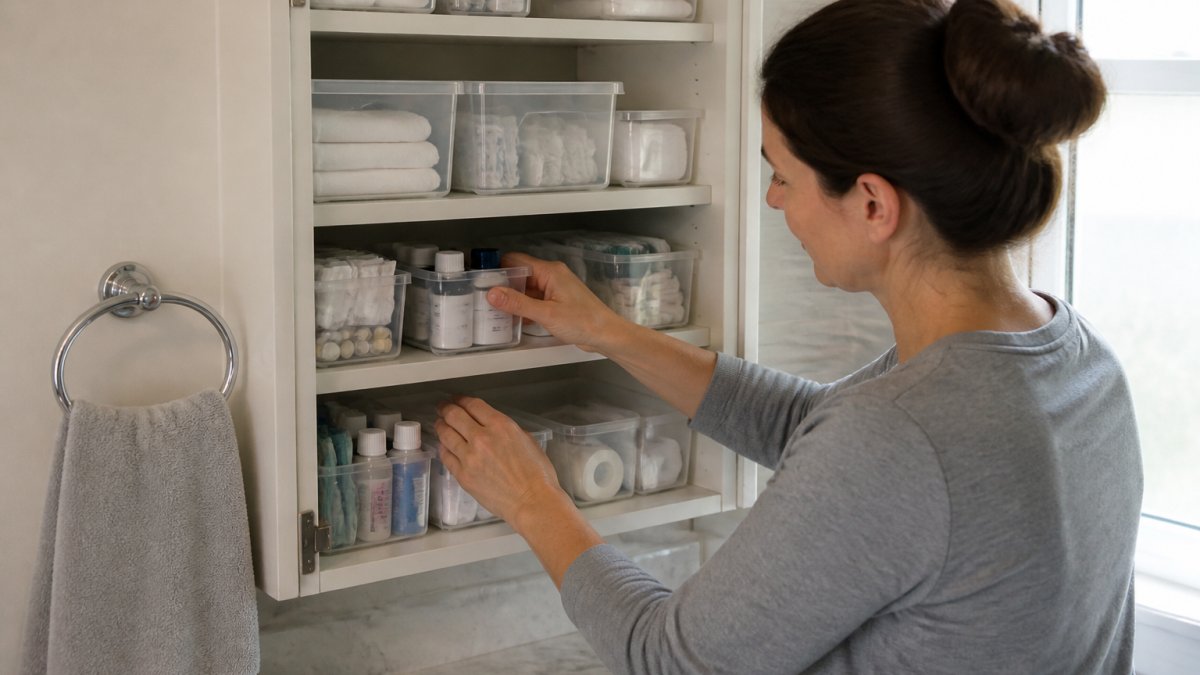
Disorganized supplies create stress exactly when you can't afford it, a caregiver searching for sterile gauze mid-wound-care is distracted from the actual care. Organization prevents that.
Creating accessible storage zones
Designate a specific area for medical supplies, a bathroom cabinet works well since it's central, typically dry, and associated with hygiene. If space is limited, use a closet shelf or bedroom drawer. The key is consistency: everyone in the household should know where supplies are stored.
Make sure the storage location is accessible. If your loved one has mobility limitations, store frequently used items at waist height, not on high shelves or low cabinets that require bending. If they use a wheelchair, ensure clear access to the storage area.
Keep emergency supplies separate from daily supplies. Your first aid kit should be immediately visible and easy to grab. Medical identification should be worn or carried, not stored away.
First Aid Kit, 500 Pieces, 600D Nylon Large Survival First Aid Bag, Emergency →
Labeling and rotation systems
Label everything with the item name, date opened (if applicable), and expiration date. This prevents confusion and ensures you use older supplies first.
Implement a simple rotation system: new supplies go to the back, older supplies come to the front. This "first in, first out" approach prevents waste and ensures nothing expires unused.
Check expiration dates monthly. Medications, sterile supplies, and first aid items have shelf lives. Expired supplies are ineffective and potentially unsafe. Replace them before they expire.
Keep a running inventory, a checklist on your phone or a notebook, noting what you have, what's running low, and what needs reordering. This prevents last-minute scrambles.
Medical Supply Storage Ideas for Different Living Spaces
Your storage approach depends on your living situation. Apartment dwellers face different constraints than homeowners; someone with limited mobility needs different solutions than someone without.
In an apartment, wall-mounted shelving above the toilet or beside the sink maximizes vertical space, and over-the-door organizers work well for smaller items like medical cards, elastic bandages, and first aid supplies. Use drawer organizers in under-sink cabinets to keep supplies sorted and accessible.
In a house, a medicine cabinet plus a small shelf or cabinet for medical supplies keeps everything in one place. If you have a laundry room or utility closet, dedicate one shelf to medical supplies, separate from cleaning products.
For someone with limited mobility, a rolling cart with multiple tiers brings supplies to the bedside or living room. Each tier can hold different categories, wound care on one tier, mobility aids on another. This eliminates the need to access high shelves or bend down.
Climate control matters: moisture degrades bandages and medications, so avoid damp bathrooms when possible. If a bathroom is your only option, ensure good ventilation, and never store supplies in direct sunlight.
Insurance, Medicare, and Payment for Home-Delivered Medical Supplies
Understanding how your supplies will be paid for prevents surprises at checkout. Many medical supplies are covered by insurance, but coverage varies widely.
Medicare covers durable medical equipment (DME) like wheelchairs, walkers, and oxygen equipment when prescribed by a doctor (Durable Medical Equipment, Prosthetic Devices, Prosthetics, Orthotics, & Supplies). Coverage typically requires that you use a Medicare-approved supplier. Your doctor must document medical necessity. You'll usually pay 20% of the approved amount after meeting your Part B deductible (Costs).
Private insurance coverage depends on your plan, some cover wound care supplies, compression stockings, and other items; others don't. Before ordering, check your plan documents and ask what's covered, what documentation your doctor must provide, and whether prior authorization is required.
For supplies not covered by insurance, Life Heals Medical Supplies and other providers offer direct purchase options. Prices vary, a basic first aid kit runs $29.75 to $36.20, while customized medical identification jewelry ranges from $10.00 to $22.00. Many suppliers offer discounts for bulk orders or subscription services for regularly needed items.
If cost is a barrier, ask your doctor about patient assistance programs.
Preparing Your Home for Medical Supply Delivery and Setup
When your order arrives, you'll want to be ready. A little preparation prevents delays and ensures supplies are set up safely.
Clear a path to your front door or designated delivery entrance, removing obstacles, loose rugs, or items that could cause a trip. In an apartment building, ensure the main entrance and hallway are accessible.
Have someone home to receive the delivery. Sign for packages if required. Inspect items as they arrive, check that quantities match your order and that nothing is damaged. If something is wrong, document it immediately and contact the supplier.
Equipment like grab bars or bath seats may need installation. If you're not comfortable doing it yourself, hire a handyman or ask a family member, improper installation creates safety risks.
Once supplies arrive, immediately put them away in your designated storage area, don't leave them in boxes or bags, where items get lost or forgotten. Label everything with the date received and complete any assembly or setup right away.
Test equipment before you actually need it. If you've ordered a new blood pressure monitor or peak flow meter, use it once to confirm it works and that you understand how to operate it.
Managing care at home is demanding enough without worrying about whether supplies will arrive when you need them. Our 500-piece first aid kit ($29.75), customized medical bracelets ($22.00), and medical cards ($10.00) are designed for real caregiving situations. Medicare's guide to durable medical equipment coverage can help you understand what insurance might cover.
Frequently Asked Questions
How can I get medical supplies delivered to my home?
Order online through a medical supply provider, specify your delivery address, and choose your preferred delivery window. You'll need to provide your address, contact information, and any insurance details if applicable.
What medical supplies should caregivers keep at home?
Essential supplies depend on the care recipient's condition, but typically include wound care items (bandages, gauze, antiseptic), mobility aids, incontinence products, and emergency supplies. A comprehensive first aid kit like the 500-piece professional survival kit ($29.75) covers common injuries. Medical identification jewelry, such as a medical bracelet ($22.00), ensures first responders have critical health information during emergencies.
How should medical supplies be stored at home?
Store supplies in cool, dry places away from direct sunlight and moisture. Use labeled containers or drawers organized by category, wound care, daily medications, emergency items. Keep frequently used items at eye level and within easy reach. Rotate stock regularly, using older items first, and check expiration dates monthly to ensure supplies remain effective.
Can medical supplies be delivered directly to your door?
Yes, most medical supply providers offer direct home delivery. Life Heals Medical Supplies delivers quality medical supplies and equipment to your home with fast, reliable shipping. Contact the provider to confirm your address is within their delivery zone and to schedule a convenient delivery window.