

Table of Contents
- Wooden Urn vs Marble Urn: A Practical Comparison
- Wooden Urn Durability: How Long Does Wood Really Last?
- Marble Urn Care and Maintenance Over Time
- Cost and Value: Wood vs Stone
- Choosing the Best Material for a Cremation Urn
- Urn for Home Display: Aesthetics and Placement
- Burial vs Display: Material Suitability
- Frequently Asked Questions
Last Updated: October 19, 2026
Wooden Urn vs Marble Urn: A Practical Comparison
Choosing between a wooden urn vs marble urn is more than an aesthetic decision. The material determines how well the memorial endures, how it handles environmental conditions, and whether it fits your family's needs. At Life Heals Medical Supplies, we break down durability, placement, cost, and long-term care.

Quick Comparison Table
| Aspect | Wooden Urn | Marble Urn |
|---|---|---|
| Material Durability | 50-100+ years with care | 100+ years, naturally durable |
| Weather Resistance | Poor outdoors; needs shelter | Excellent; withstands elements |
| Indoor Display | Excellent; warm aesthetic | Excellent; formal aesthetic |
| Burial Suitability | Moderate; degrades in soil | Excellent; stone resists decay |
| Maintenance Needs | Regular care required | Minimal; occasional cleaning |
| Price Range | $136-$146 | $182-$187 |
| Best For | Home display, indoor settings | Outdoor placement, long-term burial |
Wooden Urn Durability: How Long Does Wood Really Last?
A wooden urn for ashes can last 50 to 100 years or longer when properly cared for and kept indoors. Lifespan depends on wood type, finish, and exposure to moisture, temperature swings, or sunlight. The Patchwork Wooden Cremation Urn from Life Heals Medical Supplies is handcrafted from 100% natural Dalbergia Sissoo wood with a polished finish that protects the grain.

Outdoors, wood struggles: rain, snow, and temperature swings cause it to swell, crack, and splinter, while sunlight fades the finish and weakens fibers. Even sealed wood deteriorates faster outside, making it a liability for outdoor placement or eventual burial. Indoors, wooden urns thrive in stable, climate-controlled conditions, and the warm grain creates an inviting presence on a shelf, mantel, or memorial space.
Marble Urn Care and Maintenance Over Time
Marble is a natural stone that lasts 100+ years with minimal intervention. Unlike wood, it doesn't rot, warp, or splinter, and its density resists decay and corrosion. In a cemetery niche, burial plot, or outdoor memorial garden, it will outlast wooden alternatives by decades.
The trade-off is maintenance. Marble is porous, so acidic substances, oils, and water can stain or etch it. Marble urns like the Calla Marble Cremation Urn, crafted from 100% natural marble with a polished finish, need gentle care but reward it with lasting beauty.

Genuine marble develops character over time: natural veining and subtle color variations mean no two marble urns are identical. Some families view this uniqueness as a feature; others prefer the uniformity of cultured marble, a manufactured alternative with less authentic permanence.
Outdoors, marble holds up exceptionally well: rain doesn't penetrate deeply, freeze-thaw cycles that crack wood leave it unaffected, and sunlight doesn't fade stone. For burial or outdoor placement, that resistance to weather and time becomes the deciding factor.
Cost and Value: Wood vs Stone
A wooden urn vs marble urn comparison often starts with price, but sticker price is only part of the value equation. Understanding what drives cost in each category helps you judge whether the cheaper option is actually cheaper over time.
What drives the price of a wooden urn
Wooden urn pricing tracks four variables: species, solid versus veneer construction, joinery, and finish.
In our own catalog, the Patchwork Wooden Cremation Urn is $136.86 and the Hand-Carved Wooden Cremation Urn is $145.70. Both sit in the solid-hardwood, hand-finished tier rather than the veneer tier.
What drives the price of a marble urn
Marble pricing depends on stone type, single-block versus panel construction, hand-carving, and polish. Our genuine stone marble urns sit at the accessible end: the Calla Marble Cremation Urn and the Lux Black and Gold Marble Urn are both $182.74.
The price gap, explained
The difference between our wooden and marble urns reflects real inputs. Marble requires quarrying, slab cutting, carving, and polishing, and stone is heavy to ship. Handcrafted wood requires kiln-dried stock, joinery, and multiple finish coats, but the raw material is lighter and cheaper to move. The gap is mostly freight weight and stone-processing labor.
Value over time
Cost over time tells a different story than sticker price. A wooden urn kept indoors in stable conditions can last 50 years or more with care, but it is vulnerable to moisture and handling damage. A marble urn needs only periodic pH-neutral cleaning and does not rot, warp, or splinter, so its longer service life spreads the higher upfront cost over many more years.
For burial, a wooden urn degrades as moisture and microorganisms break down the wood, while a marble urn remains intact far longer. If burial is the plan, paying more for stone avoids paying twice.
Hidden costs to budget for
- Shipping weight. Marble urns are heavy; expect higher shipping charges and check whether the seller includes freight.
- Engraving. Custom engraving is usually priced per character or per line; ask for the quote before ordering.
- Display hardware. A heavy marble urn may need a sturdier shelf, cabinet, or memorial stand than a wooden urn of the same capacity.
- Repair or replacement. Chips in marble and dents or water stains in wood are both possible; check whether the seller offers replacements or repairs.
A fair comparison is not $136.86 versus $182.74 but total cost of ownership: purchase price plus shipping, engraving, display support, and the likelihood of refinishing or replacement over the decades you plan to keep the urn.
Choosing the Best Material for a Cremation Urn
The best material for a cremation urn depends on where you plan to keep it and for how long.
Choose a wooden urn if your memorial will stay indoors, in a climate-controlled home or columbarium. The warm grain and natural finishes create an intimate, personal feeling, and handcrafted options like the Hand-Carved Wooden Cremation Urn showcase artisan craftsmanship many families treasure. Wooden urns work beautifully on shelves, mantels, or dedicated memorial spaces with stable humidity and temperature.
Choose a marble urn if you plan outdoor placement, burial, or long-term permanence. Marble's resistance to weather, decay, and time makes it practical for cemetery niches, burial plots, or outdoor memorial gardens. Marble urns like the Zuri Black Zebra Marble Urn or Lux Black and Gold Marble Urn offer sophisticated aesthetics alongside durability, becoming lasting monuments rather than temporary vessels.
Patchwork Wooden Cremation Urn for Human Ashes Male or Female - Handcrafted →
Family tradition also matters: some families value wood's organic warmth as a reflection of their loved one's character, while others prefer stone's permanence and formal dignity. Neither choice is wrong.
Urn for Home Display: Aesthetics and Placement
A wooden urn for home display creates warmth and intimacy. The natural grain, visible in pieces like the Patchwork Wooden Cremation Urn, draws the eye and blends into living spaces, libraries, and bedrooms.
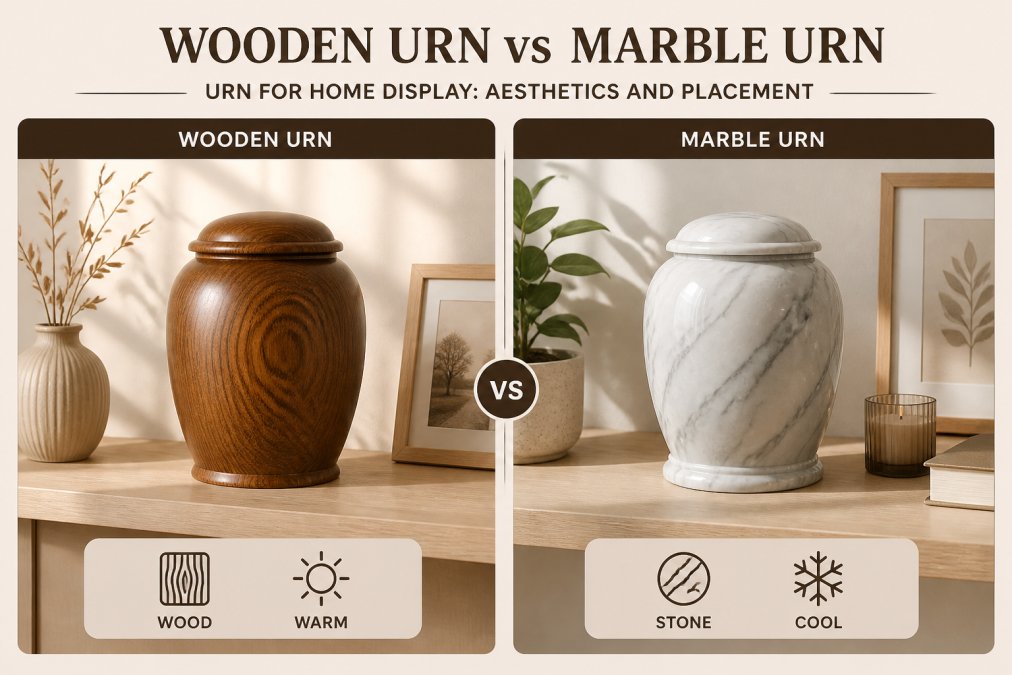
Marble urns command attention differently. Natural veining and a polished finish create a formal, gallery-like presence that works in contemporary, traditional, and minimalist interiors.
Placement matters for both materials. Keep wooden urns away from direct sunlight, which fades finish and weakens fibers, and away from heating vents, air conditioners, or humidifiers that cause wood to swell and contract.
Marble urns tolerate sunlight better but still benefit from stable placement. Avoid high-traffic areas where bumps could damage the urn; marble is heavy and durable, but dropping it can crack or chip the stone. A solid shelf, cabinet, or memorial table keeps it safe and visible.
Burial vs Display: Material Suitability
The choice between burial and home display fundamentally changes which material makes sense, but durability isn't the only factor. Capacity, dimensions, handling risk, and cemetery rules all bear on whether a wooden or marble urn will work for your plan.
Capacity and dimensions: verify fit before you buy
Cremated remains are measured in cubic inches, and the rule of thumb is one cubic inch of capacity per pound of body weight before cremation. A 150-pound adult generally needs at least 150 cubic inches; a 200-pound adult needs at least 200. Many standard adult urns are built around 200 cubic inches, with some sized for 220 to 250 to accommodate larger frames or post-processing volume.
Wood and marble reach the same capacity differently. A wooden urn can be built with thin walls, so a 200-cubic-inch wooden urn may be lighter and more compact externally. A marble urn of the same internal capacity usually has thicker walls and a heavier lid, making its outside dimensions larger and its weight substantially greater. Before ordering, confirm three numbers: internal capacity in cubic inches, exterior dimensions, and the size of the opening through which remains are placed.
Transport and handling risk
Marble's weight is its main practical liability. A full-size marble urn can weigh 15 to 30 pounds or more, and dropping it can crack or chip the stone. Moving one between rooms, into a car, or to a cemetery requires two hands, a padded box, and a plan. Wooden urns are lighter and easier to carry, but wood dents, scratches, and stains if it gets wet, and a dropped wooden urn can split along the grain or pop a joint.
For shipping and travel, wood has the edge on weight and marble on impact resistance if properly padded. Whichever you choose, keep the original packing materials for future moves, and never carry a filled urn by its lid.
Cemetery and columbarium rules
Cemetery and columbarium rules vary widely and can override your material preference. Many cemeteries require a burial vault or outer container for any urn buried in the ground, and some require urns inside a vault regardless of material. Columbaria often specify maximum urn dimensions, and a thick-walled marble urn may not fit a standard niche even when its capacity matches. Before purchasing, ask for written requirements on urn material, maximum dimensions, and whether an outer container is required.
Home display
For home display, both materials work well. A wooden urn displayed indoors in stable conditions can remain beautiful for decades, and its warm grain suits living spaces. A marble urn displayed indoors becomes a formal focal point and, with minimal care, can last generations. Your decision rests on aesthetics, maintenance preference, and how long you plan to keep the urn.
Burial
For direct burial in soil, marble is the more practical choice. A wooden urn buried in soil faces constant moisture, microbial activity, and earth pressure; the wood degrades and the finish fails. A marble urn resists those forces and remains structurally sound far longer. If the cemetery requires an outer vault, the vault does much of the protective work, but marble still outlasts wood inside it.
Above-ground niches
Some columbaria allow both wooden and marble urns in above-ground niches. The stable, dry environment extends wooden urn lifespan significantly, and a wooden urn may fit a niche that a thicker marble urn cannot. Check the niche's interior dimensions against the urn's exterior dimensions before deciding.
Frequently Asked Questions
What is the best material for a cremation urn?
The best material depends on your plans. Wooden urns offer warmth and natural beauty, ideal for home display, with prices starting at $136.86. Marble urns provide superior durability and weather resistance for outdoor placement or burial, ranging from $182.74 to $187.16. Wood suits those prioritizing aesthetics and indoor use; marble suits those wanting longevity and permanence regardless of placement.
Do wooden urns last as long as marble urns?
No. Wooden urns are susceptible to moisture, temperature changes, and decay over time. Marble's stone composition resists weathering, moisture damage, and sunlight exposure far better, making it the choice for long-term durability and outdoor placement.
How do you care for a marble urn?
Marble urns require minimal maintenance. Dust regularly with a soft, dry cloth. Avoid acidic cleaners, vinegar, and abrasive materials that etch the surface. For outdoor urns, rinse with clean water occasionally to remove dirt and debris. Protect from prolonged direct sunlight to prevent discoloration. Indoor marble urns need only occasional dusting to maintain their polished finish and natural veining.
Is a wooden urn suitable for outdoor placement or burial?
Wooden urns are not ideal for long-term outdoor use or burial. Wood absorbs moisture, warps, and decays when exposed to rain, soil, and temperature fluctuations. If burial is planned, marble or stone urns are far better suited. Wooden urns work best for indoor home display where they're protected from moisture and weather.