

Last Updated: November 7, 2026
Quick Summary
Alternatives to a medical alert bracelet for kids include medical ID necklaces, emergency contact bracelets, medical cards, and medical keychains. A necklace suits kids six and up who refuse wristbands, while cards and keychains work as backups for children who will not tolerate jewelry. Match the option to your child's age, sensory needs, and daily routine.
- The most common reason children stop wearing a medical alert bracelet is sensory discomfort, not stubbornness.
- Medical ID necklaces are unsafe for babies and toddlers due to strangulation risk.
- For autism, look for bracelets under 10 grams with smooth edges and adjustable fit.
- First responders check the wrist, neck, and ankle first, then a wallet, purse, backpack, or phone.
- Plan on replacing a medical card every year or two as print fades and corners wear.
Table of Contents
- Why Some Children Refuse to Wear a Medical Alert Bracelet
- Medical ID Necklace for Kids: A Discreet, Comfortable Option
- Emergency Contact Bracelet for Kids: When a Bracelet Still Works
- ID Bracelet for Child with Autism: Sensory-Friendly Features to Look For
- Free Medical ID Bracelets for Kids: What to Know Before You Order
- Keychains, Cards, and Other Non-Wearable Medical ID Options
- Safety, Privacy, and School Integration for Every Medical Alert Option
- Choosing the Right Medical ID for Your Child at Life Heals
- Frequently Asked Questions
Why Some Children Refuse to Wear a Medical Alert Bracelet
The most common reason children stop wearing a medical alert bracelet is sensory, not stubbornness. A metal clasp scratches, a band traps sweat, or the fit shifts during play, and the child quietly takes it off, a safety problem disguised as a behavior problem.
Three factors usually drive the refusal:
- Sensory discomfort. Tags, clasps, and stiff bands irritate skin and distract during school and sleep.
- Visibility. Older kids and teens dislike anything that announces a diagnosis to classmates.
- Fit drift. A band that fit in spring pinches by summer, so the child removes it.
The fix is rarely "try harder." It is finding an alternative to a medical alert bracelet that fits the child's body, routine, and personality. Below, we compare the realistic options and where each one breaks down.
Medical ID Necklace for Kids: A Discreet, Comfortable Option
The trade-offs matter: chains can catch on playground equipment, and necklaces are unsafe for babies and toddlers due to strangulation risk.
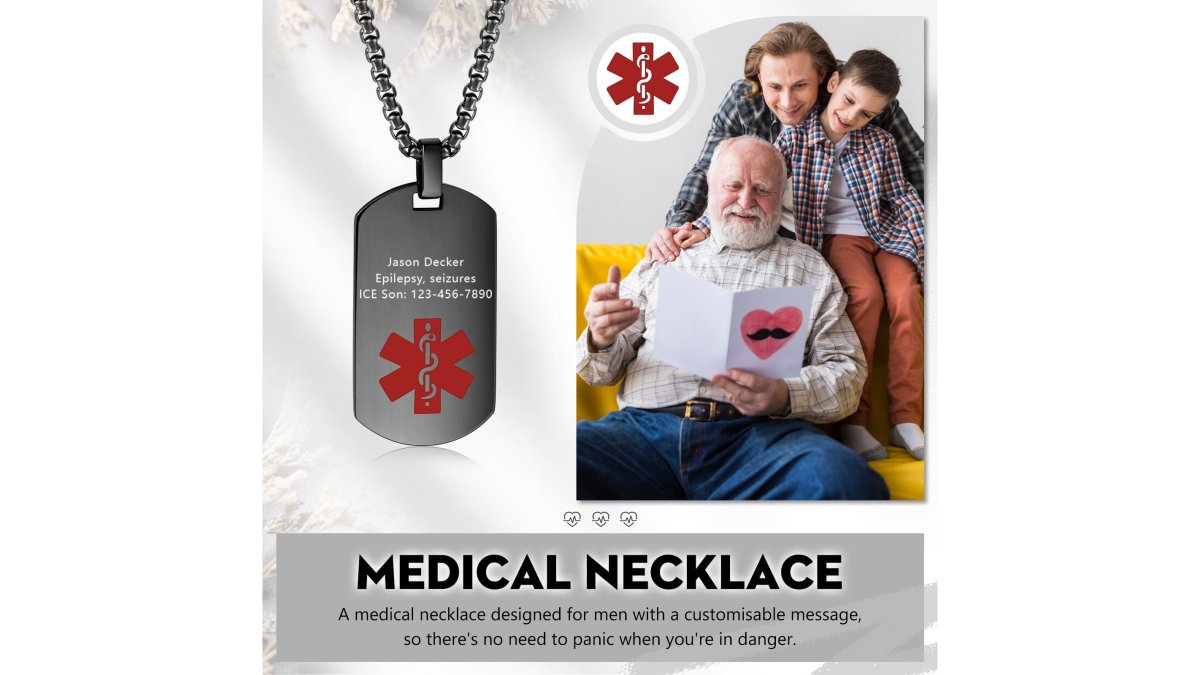
Our Custom Stainless Steel Medical Necklace can be engraved with a condition, medications, allergies, or an emergency contact and comes in silver, gold plated, and black finishes.

Best for: Kids age six and up who dislike wristbands. Skip if: The child is under three or tends to pull on necklaces.
Emergency Contact Bracelet for Kids: When a Bracelet Still Works
An emergency contact bracelet for kids remains the simplest option when the child tolerates wristbands.
The problem is usually the hardware, not the concept. A well-fitted, lightweight bracelet with a smooth inner surface gets worn. A heavy one with a protruding clasp does not.
Our Custom Children Medical Bracelet weighs about 9.5 grams and comes in seven colors, from orange to pink, in stainless steel. It is priced at $20. Color choice matters more than parents expect: letting a child pick the band turns a medical device into something they own.
Best for: Younger children and kids who tolerate wristbands. Skip if: The child has removed every bracelet you have tried.
ID Bracelet for Child with Autism: Sensory-Friendly Features to Look For
An ID bracelet for a child with autism has to clear a higher bar than a standard medical alert bracelet, because seams, weight, and movement matter more than engraving style.
Look for these features before you buy:
- Low weight. Under 10 grams reduces the "something is on my wrist" sensation.
- Smooth edges. No exposed rivets or sharp clasp corners.
- Flat, quiet hardware. Nothing that rattles or swings against the wrist.
Watch out: a bracelet that works at home may still come off at school during a meltdown. Pair any wrist-worn ID with a backup card in the backpack.
Free Medical ID Bracelets for Kids: What to Know Before You Order
What to check before ordering a free bracelet:
- Engraving depth. Shallow engraving wears away within months.
- Material. Free options are often silicone or thin metal that stretches or discolors.
- Information limits. Many free programs engrave only a name and one condition, with no room for medications or allergies.
- Replacement cost. Confirm what a replacement costs once the free one wears out.
- Turnaround time. Some programs take weeks to ship.
A free bracelet is better than no identification, but not better than a durable one that stays on. If the free option fits your child and holds the right information, use it; if it fails either test, it will end up in a drawer.
Keychains, Cards, and Other Non-Wearable Medical ID Options
Non-wearable options solve the refusal problem because there is nothing on the body to remove.
Our Medical Card fits in a wallet, purse, or pocket and can display condition, medications, allergies, blood type, and emergency contact. Our Custom Medical Keychain is made of stainless steel and costs $15.


The limitation is real: a card in a wallet is invisible in an emergency until someone looks for it. Pair a card with a wearable whenever possible.
| Option | Cost | Best for | Main limitation |
|---|---|---|---|
| Medical ID necklace | $29 | Kids 6+ who refuse wristbands | Not for toddlers |
| Children's bracelet | $20 | Younger kids, color choice | Removed by sensory-sensitive kids |
| Medical card | $10 | Wallet or backpack backup | Not visible on the body |
| Medical keychain | $15 | Backpack and school bag carry | Separated from the child easily |
Cost
How a responder actually finds a non-wearable ID
A non-wearable ID only works if it is in a predictable place. First responders check the wrist, neck, and ankle first, then a wallet, purse, backpack, or phone.
- Wallet or purse. Best for teens who carry one daily. Keep the card behind a clear window or in the first card slot.
- Backpack. A keychain clipped to the main zipper pull is more likely to be seen than one buried in a front pocket. Label the clip with the child's name.
- Lunch bag or instrument case. Useful for younger children, but only if the same bag goes to school every day.
Watch out: a card that moves between bags, pockets, and drawers will not be found. Pick one location per child and keep it there.
Matching the non-wearable option to the child and setting
- Under 3. A card in the diaper bag or a keychain on the stroller is a backup only; the primary ID should be a bracelet or anklet.
- Age 3-6. A keychain on the backpack is the most reliable non-wearable option; a card in the parent's wallet covers the child when they are together.
- Age 6-12. A card in a wallet or a keychain on the backpack works if the child carries the same bag daily. Pair it with a wearable for sports and recess.
Maintenance, replacement, and cost over time
Non-wearable IDs are cheaper up front but need replacing more often: card corners wear, print fades, and keychain engraving can rub smooth. Plan on a new card every year or two and check the keychain engraving each school year.
Safety, Privacy, and School Integration for Every Medical Alert Option
Every medical alert option fails at the same point: the gap between what the child wears and what the school knows. Close that gap deliberately, and match the option to the child's age and activity level.
Safety by age and activity
The risks change as children grow, and the same ID that suits a six-year-old can be wrong for a toddler or a teen.
- Babies and toddlers (under 3). Necklaces and pendants are not appropriate because of strangulation and choking risk. Bracelets and anklets suit toddlers better; an anklet should be snug enough that it does not slide over the heel but loose enough to slip a finger under the band.
- Preschool and early elementary (3-6). Breakaway clasps on necklaces reduce snag risk but also mean the necklace comes off during play. A lightweight bracelet in a chosen color is usually the most reliable option.
- School-age (6-12). Necklaces become practical for children who can manage a clasp, but chains can catch on playground equipment, backpack straps, and clothing. A chain that sits close to the neck with a smooth clasp is less likely to snag.
Watch out: an anklet that is too loose can catch on a shoe or a crib rail, and one that is too tight can leave a mark. Check the fit weekly during growth spurts.
How responders access digital IDs
- Locked phones. Most phones allow emergency information to be viewed from the lock screen without unlocking, but the owner must set this up in advance, and the information shown is usually limited to a name, emergency contacts, and a short medical note. A QR code is only useful if the responder thinks to scan it.
- No battery or no connectivity. A QR code that links to an online profile will not load without a signal or a charged phone; a printed card or engraved tag works without either. Keep a non-digital backup in the backpack or wallet.
- What the profile should contain. Keep the public view short: condition, allergies, medications, and an emergency contact. Do not put a full medical history in a public profile, and check who can view and edit the record.
A reader weighing this should review our QR code medical alert bracelets guide before choosing a digital option, and should confirm the lock-screen emergency information is set up on the child's or caregiver's phone.
Privacy and data security
Engrave the condition and emergency contact, not a full medical history. A visible tag should tell a responder what to do first, not expose a child's complete record to classmates.
For QR-code and app-based IDs, check who can view the record and whether the profile is public.
Watch out: a QR code sticker on a backpack or lunch bag can be scanned by anyone who sees it.
School, childcare, and emergency-plan integration
Give the school nurse and teacher a written copy of the child's emergency information, and tell them what the ID looks like and where it sits. Update it whenever medications change.
A workable routine looks like this:
- At enrollment. Provide a one-page emergency plan that lists the condition, medications, allergies, and two emergency contacts. Include a photo of the ID and where the child wears or carries it.
- At the start of each school year. Confirm the nurse and teacher have the current plan and know what the ID looks like. Ask where the child's backpack is kept.
- For field trips and sports. Send a card or keychain in the child's bag as a backup, and tell the chaperone or coach where it is.
- For travel. Carry a card in the adult's wallet as well as the child's ID, and keep a photo of the ID on a caregiver's phone.
- After any medication change. Update the engraved information, the school plan, and any digital profile on the same day.
A common pattern is that the ID is updated but the school plan is not, or the reverse. Treat them as one record and update both together.
Choosing the Right Medical ID for Your Child at Life Heals
Match the ID to the child, not to the product list. A sensory-sensitive child needs low weight and smooth edges. A teen needs discretion.
A practical way to decide:
- Under 3: bracelet or anklet, no necklace.
- Age 3-6: lightweight bracelet in a chosen color.
- Age 6-12: necklace or bracelet, depending on sensory tolerance.
Every option above is a stopgap if it is not worn. The right medical alert bracelet, necklace, or card is the one that stays with your child every day.
Whatever your child has refused to wear, there is a version of identification that fits their body and routine.
Frequently Asked Questions
What are some alternatives to a medical alert bracelet for children?
Alternatives include medical ID necklaces, emergency contact bracelets, medical keychains, wallet cards, and shoe tags. Necklaces keep engraved information close to the chest and are less likely to be removed by sensory-sensitive kids. Keychains and cards work well for children who refuse to wear anything on the wrist. Each option has trade-offs in visibility, comfort, and durability, so consider your child's age and daily routine.
Can children wear medical ID necklaces instead of bracelets?
Yes, a medical ID necklace for kids is a practical alternative. Choose a lightweight stainless steel pendant with a short chain that sits above the collarbone to reduce tugging. Engrave the condition, allergies, and an emergency contact number on the back. Necklaces are discreet and comfortable for all-day wear, but check the clasp regularly for security and avoid long chains that could catch on playground equipment.
Are free medical ID bracelets for kids reliable?
Free medical ID bracelets for kids are often offered by advocacy groups or nonprofits, but availability and engraving space vary. Always verify the organization's legitimacy and confirm what information fits on the tag. A free bracelet can be a good backup, but a durable custom-engraved ID is more dependable for daily use.
What information should a child's medical ID include?
Include the child's name, primary medical condition (such as diabetes, epilepsy, or severe allergy), medications if critical, and an emergency contact number. For a medical ID necklace for kids, use the back of the pendant for engraving. Avoid full addresses or sensitive details that could compromise privacy. First responders look for clear, concise wording, so prioritize the most life-threatening information first.
Is there a medical alert button or device designed for kids?
Some GPS-enabled medical alert devices and smart ID options exist for children, but they typically require a subscription and may not be practical for young kids. A simple engraved medical alert bracelet or necklace remains the most reliable low-tech option because it works without batteries or cell service. For children with autism who wander, combine an ID with a GPS tracker and notify your school.
