

Quick Summary
QR code medical alert bracelets are stainless steel bands with a scannable code that links to an online health profile. Anyone with a smartphone can scan the code to read your conditions, medications, allergies and emergency contacts. The bracelet is only a pointer, so keeping the profile current is essential.
- Responders scan the code with any phone camera, and no app or login is required.
- Keep the profile written for a stranger in a hurry, with key conditions and allergies first.
- Test the scan on a phone that is not signed in to your account before relying on it.
- Offline access is limited, so cache the profile on your phone and keep a printed backup.
- Update the online profile rather than replacing the bracelet every time details change.
Table of Contents
- How QR Code Medical Alert Bracelets Work
- Why Scannable Medical ID Bracelets Matter to First Responders
- Setting Up a Digital Medical Profile Step by Step
- What to Include in Your Emergency Contact and Medical Information
- HIPAA Compliance for Medical ID Data: What to Check
- Durability, Updates and Troubleshooting Your Bracelet
- Choosing the Right Medical ID for Your Family
- Frequently Asked Questions
How QR Code Medical Alert Bracelets Work
Last Updated: November 4, 2026
A QR code medical alert bracelet is a stainless steel band with a printed or etched QR code on its face, and medical alert bracelets like this one put a full health profile within reach of any responder.

The mechanics are simple. The code links to an online record that you create and update yourself.
Here is how the typical setup works in practice:
- Scan: the responder points any phone camera at the code.
- Open: the browser loads your profile page.
- Read: vital information appears in a readable layout.
- Update: you edit the profile whenever your health details change.
A common mistake is treating the bracelet as a substitute for the profile. The bracelet is only a pointer.
Engraving Versus QR Code: What Each Option Gives Responders
Engraving prints the essentials directly on the metal, such as a condition, a blood type or a short instruction. It works without a phone, power or internet connection, which matters in a remote area or a power outage.
A QR code holds far more information, but it depends on a working phone and an accessible online profile. Life Heals Medical Supplies offers the Personalized Medical QR/Engraving Bracelet at $25.00, which combines engraving and a QR code, and the Upgraded QR Code Medical Alert Bracelet at $28.00 for a QR-focused option.

| Feature | Engraved Only | QR Code Only | Engraving + QR |
|---|---|---|---|
| Works without a phone | Yes | No | Partly |
| Holds a full medication list | No | Yes | Yes |
| Information can be updated | No | Yes | Yes |
| Best for | Simple, stable conditions | Complex histories | Mixed needs |
Why Scannable Medical ID Bracelets Matter to First Responders
Paramedics often arrive at a scene where the patient cannot speak. A scannable medical ID gives them a fast route to the facts that change treatment decisions, such as a drug allergy or an anticoagulant prescription.
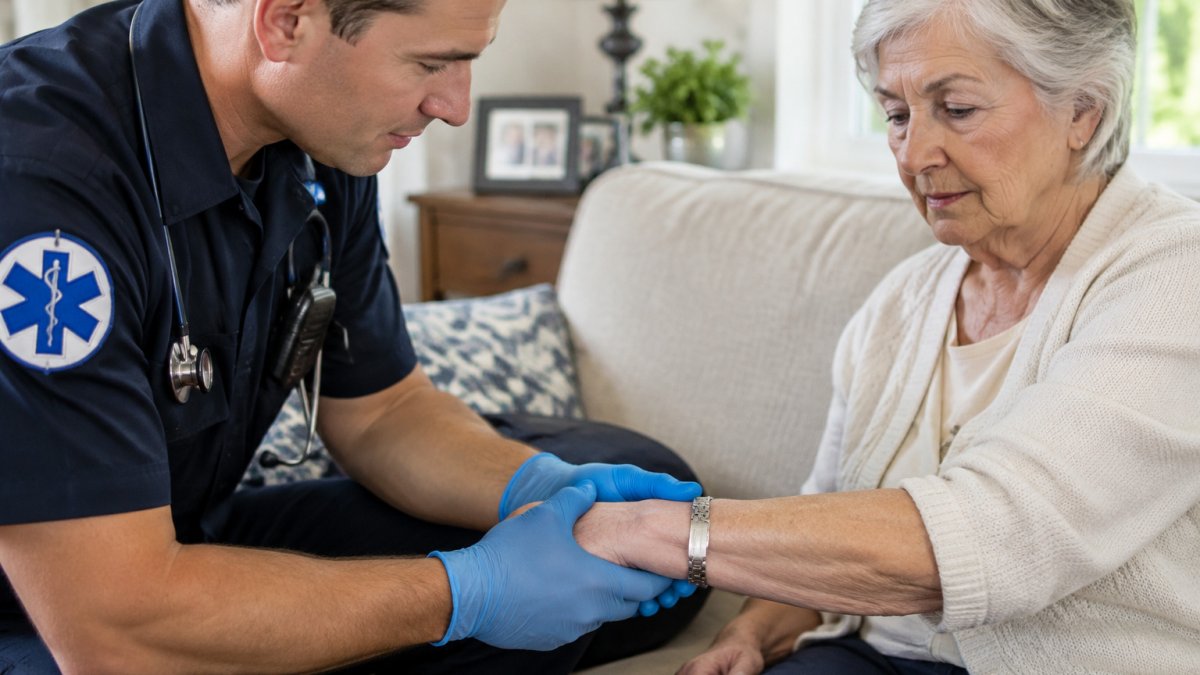
The value is greatest when the wearer has several conditions or takes multiple medications, because a short engraved line cannot carry that much detail.
The Training and Awareness Question Responders Actually Raise
Whether field crews scan a QR code depends on agency protocols, region and the individual responder, and scanning is not a standardized EMS step that can be assumed. Responders are generally trained to look for medical ID jewelry, wallets and medication lists, so a QR code should be treated as one channel among several.
That does not make a scannable bracelet useless. It means the bracelet has to work as a backup rather than a sole channel.
Bystanders, such as a family member or a passerby with a phone, may be the first to scan a code and can read emergency contacts aloud while help is on the way, so the profile layout matters as much as the code itself.
How a Responder Actually Finds and Uses the Code
In practice, the scan sequence is short. The responder sees the bracelet on the wrist, points a phone camera at the code, and the browser opens the profile page.
Keep the profile written for a stranger in a hurry.
Watch out: a profile that opens only after a login screen or a multi-step consent page will be abandoned by a responder under time pressure.
Setting Up a Digital Medical Profile Step by Step
Setting up the profile takes about 30 minutes if you have your medication list and emergency contacts ready. Work in this order so nothing gets missed.
- Gather your records. Collect current prescriptions, your physician's contact details and any recent discharge summaries.
- Choose the essentials first. Enter conditions, allergies and critical medications before anything else.
- Add emergency contacts. Include at least two people, with names, relationships and phone numbers.
- Review for accuracy. Compare every medication name and dose against your current bottles or pharmacy printout.
- Test the scan. Scan the code with an iPhone camera and an Android phone to confirm the page opens for both.
- Set a review date. Schedule a check every three to six months, and after any medication change.
Test the scan on a second phone before you rely on it, since a profile that loads on your own phone may not load on a responder's older device.
What to Include in Your Emergency Contact and Medical Information
Responders need to act quickly, so the profile should prioritize information that changes care. Include the items below, and leave out anything that is only background.
Upgraded QR Code Medical Alert Bracelet →
- Diagnoses: chronic conditions in plain language, such as "Type 1 diabetes" or "heart valve replacement."
- Allergies and reactions: list each drug or substance and what happens when you are exposed.
- Medications: name, dose and frequency, including blood thinners and insulin.
- Implants and devices: pacemakers, joint replacements, insulin pumps.
- Code status or care preferences: if you have documented wishes, note where the document is kept.
- Emergency contacts: two or more people who can answer questions about your history.
- Physician: name and phone number of your primary doctor.
Avoid long narratives. A responder scanning a phone under stress needs bullet points, not paragraphs. Review the profile with the people listed as contacts so they know what it says and can confirm the details.
HIPAA Compliance for Medical ID Data: What to Check
The Health Insurance Portability and Accountability Act (HIPAA) governs how covered entities such as doctors, hospitals and health plans protect health information. A consumer medical ID product may not be covered by HIPAA, so check each provider's privacy policy and not just the marketing claims.
Before you enter data, look for these points in the provider's documentation:
- Where the profile data is stored and whether it is encrypted in transit and at rest.
- Who can see the record, and whether public scanning exposes the full profile or a limited view.
- How you delete the data if you stop using the product.
- Whether the company sells or shares personal health information with third parties.
If a provider cannot answer these questions clearly, treat that as a warning sign. Limit what you store to what a responder truly needs.
Durability, Updates and Troubleshooting Your Bracelet
Stainless steel generally holds up to daily wear, but a printed or etched surface can fade if the bracelet is rubbed against rough surfaces for long periods. Check the code every few months. If it becomes hard to scan, have the bracelet replaced rather than waiting for an emergency.
Offline Access: What Happens Without Cell Service or Wi-Fi
A QR code is only a pointer to a web page, so the profile has to load somewhere. In a city with strong coverage, that is rarely a problem.
There are three practical ways to reduce that risk, and the strongest setups use more than one:
- Cache the profile on the wearer's own phone. Most smartphones let you save a web page for offline reading, and some medical ID providers offer a dedicated app that stores the profile locally. A responder who finds the wearer's phone can open the cached record even without a signal.
- Keep a printed backup in a wallet or bag. A folded card with the same conditions, medications, allergies, and emergency contacts costs nothing and works when every battery is dead.
- Choose a provider that serves a lightweight page. A profile that loads as a simple text page rather than a media-heavy site is more likely to open on a weak connection or a responder's older device.
Watch out: a cached page can go stale. If you update a medication and rely on an offline copy, refresh the cache the same day, or the responder may read an outdated dose.
If the Code Will Not Scan
If the code will not scan, try these fixes in order:
- Clean the code with a soft cloth to remove oil or dirt.
- Increase the screen brightness and hold the phone 4 to 6 inches away.
- Confirm the profile is still live and the link has not expired.
- Scan with a second phone to rule out a camera problem.
- Try a third-party QR scanner app if the phone's built-in camera will not read the code.
A scratched or faded code is a hardware problem, not a software one. If cleaning does not restore a reliable scan, replace the bracelet. Do not wait for an emergency to discover the code is unreadable.
Updating the Profile Without Replacing the Bracelet
For updates, edit the profile online rather than replacing the bracelet. The code stays the same, so your existing ID keeps working after each change. Set a review every three to six months and after any medication change, and confirm the page still loads on a phone that is not signed in to your account. Orders can be delivered directly to your door, so ordering a replacement is straightforward if the surface wears out.
Choosing the Right Medical ID for Your Family
The right choice depends on who wears the ID and what they need communicated. Adults managing their own care may want a full QR profile, while a child may do better with a simple engraved ID that a parent keeps updated.
- Adults with complex histories: the Personalized Medical QR/Engraving Bracelet combines both approaches.
- Anyone who prefers a necklace: the QR Medical Necklace at $22.00 keeps the code close to the body.
- Those wanting a lighter, more discreet option: the QR Medical Necklace at $20.00 offers a rose gold or white gold finish.
- Older relatives who need a dependable bracelet: a QR-focused bracelet such as the Upgraded QR Code Medical Alert Bracelet at $28.00 is a practical starting point.
If you are choosing for an older parent, our guide on which medical alert bracelet for seniors is right for you walks through the comparison in more detail. Men with specific medical ID needs can also read how to choose medical ID jewelry for men before buying.

Whichever you choose, set up the profile before the ID leaves the box, and tell the family members listed as contacts where the information is kept. A medical ID only helps when the right details are already in place.
Frequently Asked Questions
Can you put a QR code on a medical alert bracelet?
Yes. Medical alert bracelets can carry a QR code that links to a digital medical profile. The code is typically laser-etched or printed on stainless steel so it stays readable after daily wear. A responder with a smartphone scans the code and sees the profile you have set up, which can include conditions, medications, allergies and emergency contacts. Because the code points to an online record, keep the profile updated whenever your health information changes, since an outdated profile can be worse than none.
Do EMTs and first responders actually scan QR code medical bracelets?
Scanning depends on the responder's agency protocols and whether the patient can be assessed quickly. A bracelet with both a QR code and a short engraved summary of critical information gives responders a fallback if the phone, network or scanner is unavailable at the scene.
What information should be included in a digital medical ID profile?
Focus on information that changes emergency care: current conditions, medications and dosages, known allergies, implanted devices, advance directives if you have them, and two emergency contacts with phone numbers. Keep entries short and current. Avoid storing full medical records in the profile, since responders need quick facts, not complete histories, and less stored data means less exposure if the account is compromised.
Is my medical information safe with a QR code bracelet?
Ask the provider how the profile is stored, whether data is encrypted in transit and at rest, and who can access it. Under HIPAA, covered entities such as healthcare providers and insurers must safeguard protected health information. A consumer medical ID company may not be a covered entity, so check its privacy policy and the rules that apply to it. Read the privacy policy, use a strong account password, and review who has access to the profile before you rely on it.
