

Last Updated: November 4, 2026
Quick Summary
Choose a patient transfer sheet by matching it to the transfer you do most and how much your loved one can help. Measure the mattress width, patient height and weight, then confirm the sheet's dimensions and weight capacity cover them, and pick handles for grip.
- A lateral transfer sheet and a repositioning sheet are different jobs, so pick for the move you make most.
- A sheet rated below your loved one's weight is a safety risk, not a bargain.
- The positioning bed pad with reinforced handles is rated for up to 400 pounds and measures 48 by 40 inches.
- Use two caregivers for a lateral transfer of an adult who can assist, and three or four for a heavier patient.
- Lower the bed so the mattress sits near the middle of the caregiver's thigh, roughly hip height.
Table of Contents
- Start With the Transfer Type and Your Loved One's Mobility
- Patient Transfer Sheet Size: Dimensions, Fit, and Weight Capacity
- Why a Patient Transfer Sheet With Handles Changes Caregiving
- Material, Durability, and Anti-Slip Design
- Patient Transfer Sheet vs Transfer Board: Which Fits Your Situation
- How to Use a Patient Transfer Sheet Safely
- Cleaning, Reuse, and Compatibility With Beds and Equipment
- Ordering the Right Transfer Sheet for Your Home
- Frequently Asked Questions
Start With the Transfer Type and Your Loved One's Mobility
The right patient transfer sheet depends on two things: the kind of move you make most often, and how much your loved one can help. Get those two answers first, and the rest of the decision gets much easier. Caregivers often buy the wrong sheet when they skip this step. (Source: the growing prevalence of home healthcare services)
Here is the framework we use:
- Bed to stretcher or chair: you need a sheet built for a lateral transfer, with handles a second person can grip.
- Turning in bed: a flat positioning pad with handles works well.
- Repositioning up the bed: a low-friction sheet that slides, not one that grips.
- Fully dependent patient: choose a higher weight capacity and more handles.
Matching the Sheet to Bed-to-Stretcher, Lateral, and Repositioning Transfers
A lateral transfer moves someone sideways, from bed to stretcher or bed to chair. A repositioning move shifts them up or over within the bed. These are different jobs, and one sheet rarely does both well. Pick the sheet for the move you make most, not the one you make once a month.
Patient Transfer Sheet Size: Dimensions, Fit, and Weight Capacity
Sheet dimensions and weight capacity are the two specs caregivers most often get wrong. A sheet that is too small gives you nothing to grip. One rated below your loved one's weight is a safety risk, not a bargain.
Measure before you order. Note the mattress width, the patient's height, and their weight.
Patient Size, Height, and Weight Considerations
Match the sheet to the person, not just the bed. A taller patient needs a longer sheet so the fabric reaches under the shoulders and hips. A heavier patient needs a higher load capacity with handles rated for the full weight.
A common mistake is buying by bed size alone. A sheet that fits the mattress can still be too short for the person on it.
Why a Patient Transfer Sheet With Handles Changes Caregiving
Handles turn a two-person strain into a controlled lift. A patient transfer sheet with handles gives each caregiver a firm grip, so the work spreads across arms and legs instead of one twisting back.
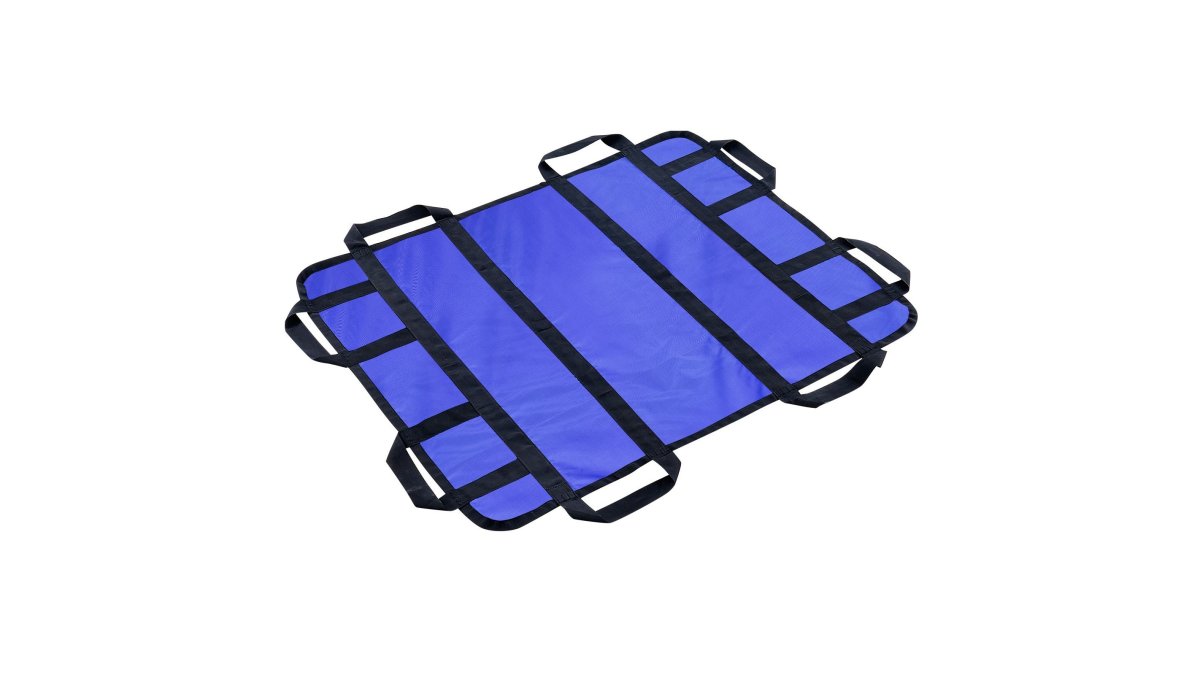
The eight reinforced handles on our positioning bed pad with reinforced handles are designed to support two to four caregivers working together. The pad is rated for up to 400 pounds and measures 48 by 40 inches. The soft, easy-to-grip handles are intended to make turning, lifting, and sitting a patient up easier.

Material, Durability, and Anti-Slip Design
Material decides how the sheet slides, how long it lasts, and how safe it feels. Most reusable transfer sheets use polyester, polypropylene, or a non-woven fabric blend.
Look for three things:
- Reinforced handles to make lifting and turning easier.
- Machine-washable polyester that air dries quickly, so you can reuse it.
Durability matters for long-term use, and the product listing describes resistance to aging, tearing and wear. If quality and trusted sourcing matter to you, see our guide to quality products you can trust.
Positioning Bed Pad with 8 Reinforced Handles, 48" x 40" Lifting, Turning →
Patient Transfer Sheet vs Transfer Board: Which Fits Your Situation
A transfer board is a rigid plank. A patient transfer sheet is flexible fabric. The right pick comes down to the transfer and the patient's mobility level.
| Situation | Best choice | Why |
|---|---|---|
| Bed to stretcher, lateral move | Transfer sheet with handles | Slides sideways with a firm grip |
| Seated slide from bed to wheelchair | Transfer board | Rigid surface bridges the gap |
| Turning or repositioning in bed | Positioning pad with handles | Even support and grip points |
| Patient who can bear weight and pivot | Transfer board | Simple and quick |
| Fully dependent, heavier patient | Transfer sheet with handles | Spreads the load across caregivers |
Use a board when the person can sit and shift their own weight. Use a sheet when they cannot, or when you are moving them while lying down.
How to Use a Patient Transfer Sheet Safely
Safe use starts before you touch the patient. The goal is to move the load with your legs and the sheet, not with your lower back, and to know when one more pair of hands is the right answer.
Set up the room and the team first
- Bed height: lower the bed so the mattress surface sits near the middle of the caregiver's thigh, roughly hip height. Working above shoulder height or below knee height is where most back strain begins.
- Clear the path: move furniture, lock the wheels on the bed and the chair or stretcher, and confirm the receiving surface is at the same height or slightly lower than the bed.
- Team size: use two caregivers for a lateral transfer of an adult who can assist, and three or four for a fully dependent or heavier patient. If you are alone and the patient cannot help, stop and get help rather than attempting the move.
- Explain the plan: tell the patient what will happen, on what count, and where their hands should go. A patient who knows the count can help instead of bracing against you.
The transfer, step by step
- Inspect the sheet. Check seams, handles, and fabric for tears or worn stitching. A damaged handle can tear mid-transfer.
- Roll the patient to one side and place the sheet centered from shoulders to hips, with equal fabric on both sides.
- Roll them back onto the middle of the sheet so their weight is distributed, not bunched under one hip.
- Grip the handles, not the fabric or the patient's arms. Keep your back straight, bend your knees, and stagger your stance with one foot forward.
- Slide on a count of three. Push from your legs and shift your weight; do not lift and carry the patient's full weight.
- Recheck position before you step away, and make sure the patient is centered and stable.
Watch out: pulling a patient by the arms or shoulders instead of the sheet concentrates force on their joints and on your back. Use the handles every time, and stop the transfer if the patient reports pain, if the sheet bunches, or if you feel your own back loading up.
When to stop and get more help
A transfer is not a test of strength. Stop and reassess if the patient cannot tolerate lying flat, if their weight exceeds the sheet's rated capacity, if the receiving surface cannot be locked or aligned, or if you cannot keep your back straight through the move. Calling for a second caregiver or a mechanical lift is the safer choice, not a failure.
Cleaning, Reuse, and Compatibility With Beds and Equipment
A sheet that fits the person can still fail the equipment check. Before you buy, confirm the sheet works with the bed, mattress, and receiving surface you actually use, and set a cleaning routine that matches whether the sheet is single-use or reusable.
Compatibility checks before you order
- Mattress width and length: measure the mattress, not the frame. The sheet should cover from the patient's shoulders to hips with enough overhang on each side to grip. A sheet narrower than the mattress leaves nothing to hold.
- Mattress type: a low-friction sheet slides easily on a smooth mattress but can migrate on an air or alternating-pressure mattress. Check whether the manufacturer specifies compatible mattress types.
- Bed rails and headboard: confirm the sheet does not catch on rails or the headboard during a lateral move, and that handles remain reachable when rails are raised.
- Receiving surface height: the stretcher, chair, or second bed should sit at the same height or slightly lower than the bed so the patient slides down, not up.
- Weight capacity: the sheet's rated load must cover the patient's weight plus the force of the transfer, and the handles must be rated for the full load, not just the fabric.
Cleaning and reuse by product type
- Reusable fabric sheets: follow the manufacturer's wash instructions, typically machine washing in warm water and air drying or tumble drying on low. Wash after every use if there is any soiling, and inspect seams, handles, and fabric before each reuse. Retire any sheet with frayed stitching, cracked handles, or a torn surface.
- Single-patient or disposable sheets: these are meant for one patient and are not laundered for reuse. Discard after use or when soiled, and do not attempt to wash and reissue them.
- Water-repellent finishes: these degrade with repeated hot washing and harsh detergent, so check the label before assuming a sheet can be washed at high temperature.
Watch out: a sheet that looks clean can still have a compromised handle or seam. Inspect it every time, and take it out of service at the first sign of wear rather than waiting for a failure during a transfer.
Ordering the Right Transfer Sheet for Your Home
Ordering comes down to fit and capacity. Write down the patient's height and weight, the mattress width, and the transfers you do most. Then match those to the sheet specs.
Products are delivered directly to your door, and our caregiver supply checklist helps you spot the other items you may need alongside the sheet. If you want to know how delivery works, read our guide to medical supply delivery.
Frequently Asked Questions
What should you look for when choosing a patient transfer sheet?
Check four things: size and weight capacity against the patient's measurements, handle count and grip design, material durability and washability, and whether the sheet suits the transfer you actually do. A 48 by 40 inch positioning pad with eight reinforced handles and a 400 pound capacity, like the one Life Heals Medical Supplies carries, is designed for turning, lifting, and repositioning. Confirm the sheet's stated load limit before use.
Are patient transfer sheets reusable or disposable?
Both exist. Reusable sheets are typically polyester or a polypropylene blend, machine-washable, and cost more upfront but last longer. Disposable or single-patient use sheets are thinner non-woven fabric and are discarded after use, which suits infection control or short-term recovery. For home caregiving, a reusable sheet usually makes more sense on cost, as long as you wash it after contact with bodily fluids and inspect seams and handles for wear.
Can one caregiver use a patient transfer sheet alone?
It depends on the patient's mobility level and the sheet's design. A sheet with multiple handles supports two to four caregivers working together, which is the safer setup for a dependent patient. If your loved one can bear some weight and assist, a single caregiver may manage a repositioning task with a properly sized sheet, but never lift a full body weight alone. Ask a physical or occupational therapist to assess your situation before relying on solo transfers.
How do you choose the right size patient transfer sheet?
Measure from the shoulders to below the hips and across the widest point of the body, then pick a sheet with a contact area that covers that span with some margin. A 48 by 40 inch pad fits many adults. Check the stated weight capacity against the patient's weight, including any equipment, and confirm the sheet fits your mattress width without bunching. Too small a sheet concentrates load and raises the risk of a slip during a lateral transfer.
Choosing a transfer sheet is really about protecting two people at once: the person you care for and yourself. Life Heals Medical Supplies can help you get it right with quality products you can trust, fast delivery to your door, and support for every stage of caregiving. Get started with Life Heals Medical Supplies and make every transfer safer and calmer.
