

Table of Contents
- Start With Where the Urn Will Live
- Types of Cremation Urns and What Each Is For
- Types of Cremation Urn Materials and How Long They Last
- Cremation Urn Size Calculator: How Much Capacity You Need
- White Marble Urn for Burial: What to Check Before You Buy
- Opening, Sealing, and Transferring Ashes Safely
- Buying Your Urn: Choosing Together and Ordering With Confidence
- Frequently Asked Questions
How to Choose a Cremation Urn: What Matters Most?
Last Updated: November 10, 2026
Start With Where the Urn Will Live
Choosing a cremation urn starts with one question: where will it spend most of its time?
A common mistake is buying a beautiful urn before checking placement rules.
Here is a simple way to narrow the field:
- Home display: Focus on finish, weight and style. Wood and polished stone are popular.
- Burial: Confirm the cemetery's container rules first. Ask whether a sealed or biodegradable option is required.
- Columbarium niche: Measure the niche opening carefully. Niche sizes vary by facility.
Watch out: Do not assume a display urn can go into the ground. Many decorative urns are not built for burial and may crack over time.
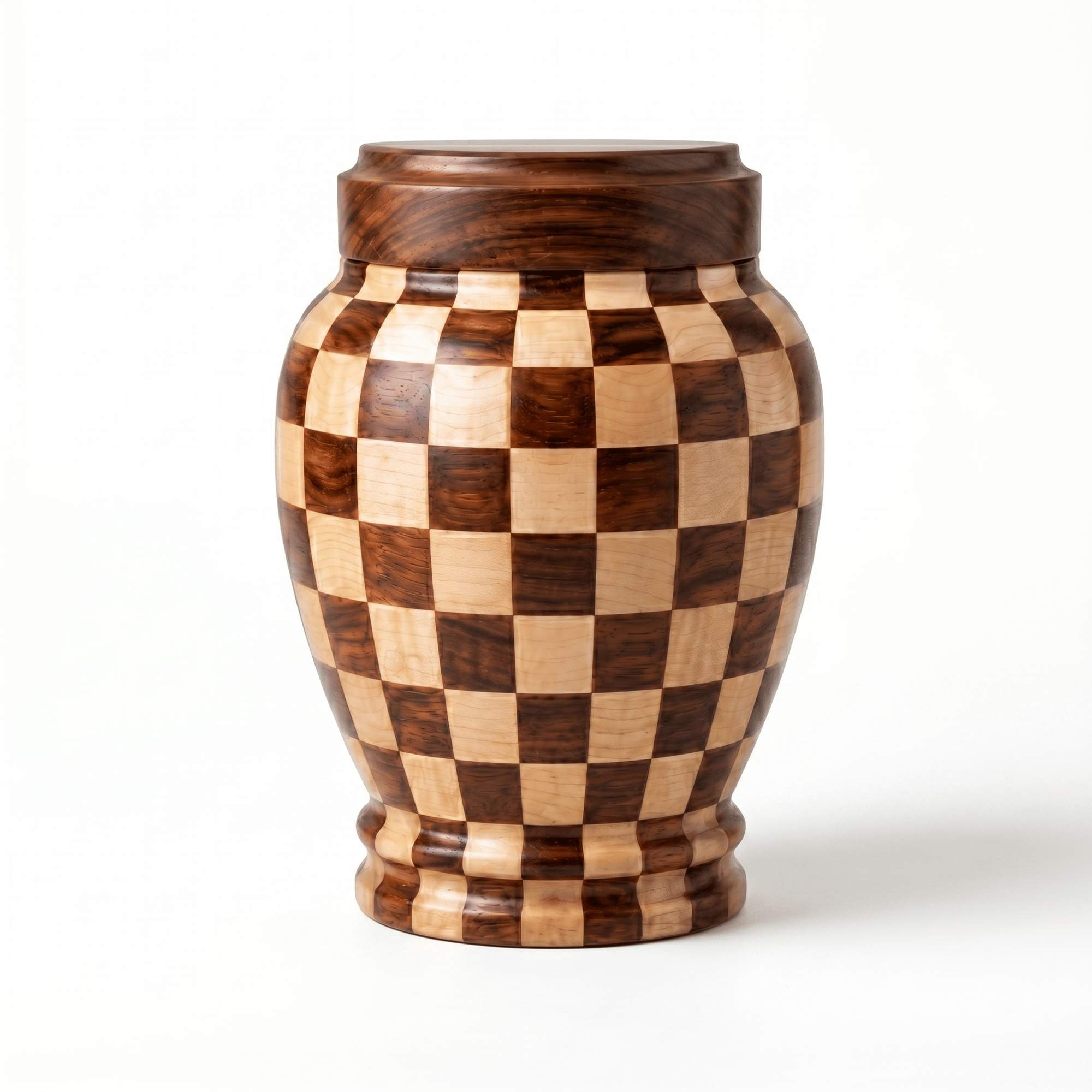
The Patchwork Wooden Cremation Urn is one example of a handcrafted wooden urn for home display or burial. You can view a decorative wooden option for home display or burial with full details.
Types of Cremation Urns and What Each Is For
Cremation urns fall into a few broad groups, each built for a different job.
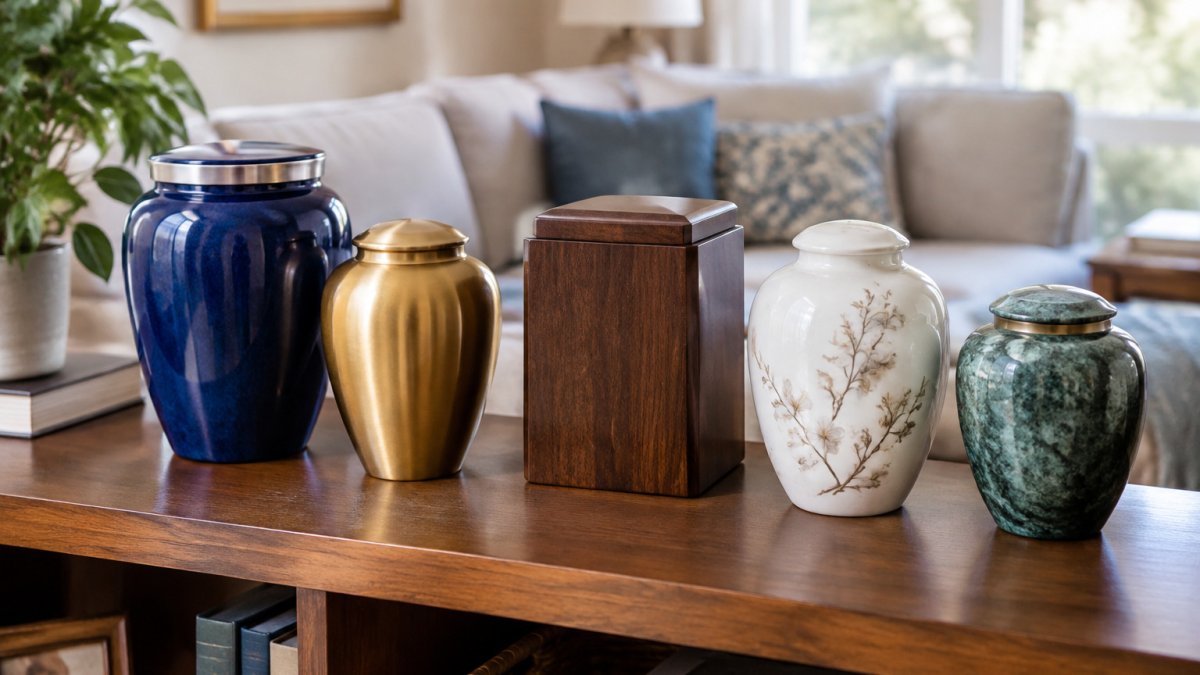
Keepsake urns are small containers that hold a portion of the ashes, often used to share remains among relatives.
Display urns are built to sit in a home, focusing on design, finish and material.
Burial urns are made to be placed in the ground.
Companion urns hold the ashes of two people in one container, a common choice for couples.
Types of Cremation Urn Materials and How Long They Last
Material affects how an urn looks, feels and holds up over the years.
Wood is warm and natural, and is often chosen for home display. Compare the two directly in Marble vs Wooden Urns for Burial: Which to Choose.
Marble is a natural stone with a heavy, polished appearance.
Metal can be sturdy but may tarnish; ceramic can chip if dropped.
Biodegradable urns are designed to return to the earth. They suit burial in some cemeteries and scattering.
Many families compare marble against wood. See a focused breakdown of how long wooden and marble urns last.
Cremation Urn Size Calculator: How Much Capacity You Need
Capacity is the one specification that cannot be fixed after purchase. An urn that is too small cannot hold all the remains, and sizing is a straightforward calculation once you know the inputs and margin to build in.
The One-Cubic-Inch-Per-Pound Rule, Precisely
The widely used starting rule is one cubic inch of urn capacity per pound of body weight. This is a planning estimate, not a measurement: cremated remains volume varies with body composition, bone density and the cremation process, so treat the rule as a floor.
To use it:
- Write down the adult's body weight in pounds.
- Treat that number as cubic inches of minimum capacity.
- Add a safety margin (see below).
- Compare the result to the urn's stated capacity, not its exterior dimensions.
A Simple Capacity Calculator You Can Run by Hand
Use this sequence for any urn you are considering:
- Step 1, Base estimate: body weight in pounds = cubic inches.
- Step 2, Margin: multiply the base by 1.10 for 10 percent, 1.15 for 15 percent, or 1.20 for 20 percent.
- Step 3, Compare: the urn's listed capacity must be greater than or equal to the Step 2 figure.
Worked Examples With the Safety Margin Built In
Example 1, 150 pounds. Base estimate: 150 cubic inches. A 15 percent margin gives 172.5, so look for an urn rated at 173 cubic inches or more.
Example 2, 200 pounds. Base estimate: 200 cubic inches. A 20 percent margin gives 240 cubic inches.
Example 3, 120 pounds. Base estimate: 120 cubic inches. A 10 percent margin gives 132 cubic inches.
Example 4, companion urn for two adults. Add both base estimates, then apply the margin to the total. Two adults at 160 and 140 pounds give a base of 300 cubic inches; a 15 percent margin brings it to 345 cubic inches. Confirm the companion urn's listed capacity covers the combined figure, not each person separately.
When You Are Uncertain About the Weight
Families often do not know an exact weight, especially when arrangements are being made quickly. In that case:
- Use the highest weight you can reasonably confirm, not an average.
- Apply the larger 20 percent margin.
- Ask the funeral home or crematory what volume of remains to expect; they can give a more accurate figure than a rule of thumb.
Watch out: Do not confuse exterior dimensions with interior capacity. A tall, narrow urn can have a smaller interior volume than a shorter, wider one. Check the stated capacity figure before ordering.
Matching Capacity to Urn Type
- Standard adult urn: sized for the full remains of one adult; confirm the cubic-inch rating against your Step 2 figure.
- Companion urn: sized for two people combined; add both base estimates before applying the margin.
- Keepsake urn: sized for a small portion only; these are not intended to hold all remains.
- Scattering urn: capacity still matters if the urn will hold the remains before release; confirm it meets the same Step 2 figure.
A capacity check takes a few minutes and prevents the most common urn-buying regret. Run the numbers before you compare finishes, because no design choice can compensate for an urn that is too small.
Run the numbers before comparing finishes, since capacity is the one specification that cannot be changed after purchase.
| Step | What to do | Note |
|---|---|---|
| 1. Base estimate | Use body weight in pounds as cubic inches | Planning estimate, treat as a floor |
| 2. Margin | Multiply base by 1.10, 1.15 or 1.20 | Choose margin by certainty of weight |
| 3. Compare | Urn's listed capacity must be at least the Step 2 figure | Compare capacity, not exterior size |
| 4. Verify units | Confirm cubic inches, liters or quarts | 1 liter is about 61 cubic inches |
| Companion urn | Add both base estimates, then apply margin | Confirm combined capacity |
Urn capacity needed for worked examples (cubic inches)
White Marble Urn for Burial: What to Check Before You Buy
Start by asking the cemetery whether a stone urn is allowed and whether it needs to be sealed.
Next, confirm the dimensions. A burial urn must fit the opening or plot space the cemetery provides.
Natural marble has veining and tone differences from piece to piece.
The Luna - carrara white marble urn is one option for families who want a classic white stone with grey veining.
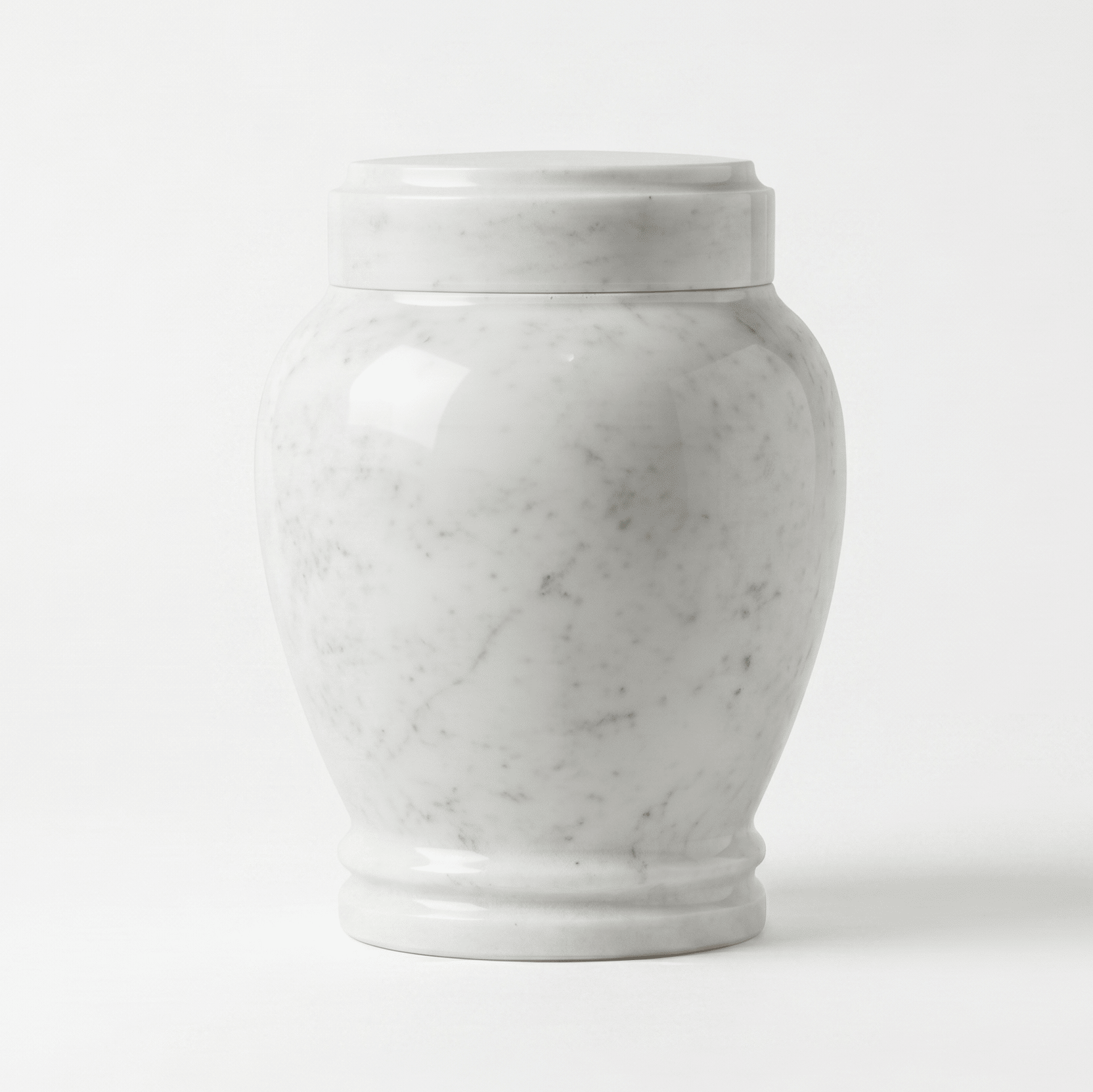
Marble is heavy. Plan for handling, especially if the urn will be moved more than once.
Opening, Sealing, and Transferring Ashes Safely
Handling ashes calls for care and patience. The goal is to move the remains into the chosen urn without loss, damage, or a closure that fails later.
Prepare the Workspace Before You Open Anything
Work on a clean, stable surface at waist height, covered with a clean cloth. Keep the area free of drafts, because ashes are fine and can scatter with a small gust. Have these items within reach:
- A funnel or a folded piece of stiff paper
- A spoon for the last portion
- Clean gloves
- The destination urn, with its closure hardware and instructions
Opening Common Urn Closures
Urn closures vary by design, and forcing the wrong one can crack the urn or spill contents. The most common types are:
- Screw-on base or lid: turn gently and lift straight up. Do not pry at an angle.
- Friction-fit lid: lift evenly with both hands; a slight rocking motion can help if the fit is tight.
- Threaded lid with a gasket: the gasket may resist after time; inspect it for cracking before reuse.
- Sealed or glued closure: some urns arrive sealed from the maker. If the closure is not designed to be reopened, do not force it; ask the funeral home or crematory to handle the transfer.
Open the container slowly and keep the opening small. Forcing a lid is the most common cause of a cracked urn or a spill.
Transferring the Ashes
Use a funnel or a folded piece of stiff paper to guide the remains into the new urn. Pour slowly and keep the opening small; a spoon can help with the last bit.
If you need to pause, place the remains in the shallow tray and cover it. Do not leave an open container unattended in a drafty room.
Sealing the Urn Correctly
Sealing depends on the urn's design. Common approaches include:
- Gasket: a rubber or silicone ring that compresses when the lid is tightened. Inspect it before use and replace it if it is cracked or stiff.
- Thread tape or sealing tape: applied to threaded closures to improve the seal.
- Locking mechanism: some urns have a latch or screw that secures the lid; follow the maker's instructions for torque and orientation.
- Adhesive seal: some urns are designed to be sealed permanently with an adhesive. This is common for burial urns that must meet cemetery requirements.
Follow the maker's instructions rather than improvising. If the cemetery requires a sealed container, confirm before the ashes are placed inside that the urn can be sealed to that standard. A funeral home or crematory can advise on whether a particular urn meets a cemetery's sealing requirement.
When to Use a Liner or Transfer Service
Some families use a liner, a separate sealed container that sits inside the urn, to add protection and simplify transfer. Liners are common for burial urns and for urns that will be handled frequently.
If you are not sure how to proceed, ask the funeral home or crematory to transfer the ashes for you.
Watch out: Do not assume a decorative display urn is sealed well enough for burial or for long-term protection.
A Final Check Before Placement
Before the urn goes to its final location, confirm three things: the closure is secure and matches the maker's instructions, the urn meets any cemetery or columbarium requirement you were given in writing, and the urn's capacity held all the remains with the margin you planned for.
Buying Your Urn: Choosing Together and Ordering With Confidence
Choosing an urn is often a family decision. Talk about preferences early: some want a visible piece in the home, others something simple or private.
When you are ready to order, check these details:
- Dimensions and capacity against the planned placement and the size calculation
- Material and whether it suits indoor display, burial or scattering
- Cemetery or columbarium rules for the chosen type
- Delivery timing and whether you need the urn by a certain date
The Calla marble Cremation urn suits families who want a polished stone piece with cream and beige tones.
Take your time, measure carefully and confirm the rules before ordering. A well-chosen urn gives a lasting place to honor someone you loved.
Frequently Asked Questions
How long do human ashes last in an urn?
Cremated remains do not break down over time the way organic matter does, so they can stay in an urn indefinitely when the container is sealed and kept dry. The bigger concern is the urn itself. Wood can warp or crack in dry or humid rooms, and some finishes fade with sunlight. Choose a material that suits the environment where the urn will sit, keep it out of direct sun and away from damp areas, and check the seal periodically. If the urn will be buried or placed in a columbarium, confirm with the cemetery or facility which urn materials and sizes they accept before purchase.
How do I determine the correct size for a cremation urn?
A common planning guideline is one cubic inch of urn capacity for every pound of body weight at the time of death, though actual cremated remains vary and the figure is only a starting point. Add a safety margin of roughly 10 to 15 percent so the remains fit comfortably without packing. Remember that a rough estimate of cremated remains is not a substitute for the crematory's own volume information. Ask the crematory how much the remains weigh or what container size they provide, and compare that with the urn's listed capacity before ordering.
What is the difference between a burial urn and a keepsake urn?
A burial urn is built to be placed in the ground or a columbarium niche, so it is usually made from a durable material such as marble, stone, or sealed wood and is sized for the full set of remains. A keepsake urn is smaller and holds a portion of the ashes for display at home or for sharing among family members. Keepsake urns are often decorative and easier to move. Before buying either, confirm with the cemetery or facility what container types they accept, since some require a specific burial vault or size limit.
