

Last Updated: November 13, 2026
Quick Summary
A medical ID bracelet shares your health information with anyone who finds you, but it cannot call for help. A medical alert system connects you to a monitoring center or emergency contacts when you press its button, and it usually carries a recurring monthly fee. For a senior who lives alone with fall risk, a medical alert system is the primary safety layer, with an ID bracelet worn alongside it.
- A medical ID bracelet works only when someone finds the wearer and reads it.
- A monitored alert system typically carries a recurring monthly monitoring fee.
- Life Heals medical ID bracelets range from $22.00 to $35.00, with no recurring fees.
- Compare first-year totals, including equipment and add-ons, rather than monthly rates alone.
- Confirm in writing whether a device's fall detection is included and how it works.
Table of Contents
- Medical ID Bracelet vs Medical Alert System: The Core Difference
- Side-by-Side Comparison: Medical ID Bracelet vs Medical Alert System
- What Happens in an Emergency, Step by Step
- What Conditions Should Be on a Medical Alert Bracelet
- Medical Alert System Costs and Ongoing Fees Compared
- Best Medical Alert Bracelet for Seniors: Which Option Fits Your Situation
- Choosing and Maintaining Your Medical ID Bracelet
- Booking Your Next Step: Choosing the Right Medical ID at Life Heals
- Frequently Asked Questions
Medical ID Bracelet vs Medical Alert System: The Core Difference
Choosing between a medical ID bracelet and a medical alert system comes down to one question: do you need to communicate health information, or summon help? This guide focuses on how each option works for a senior who lives independently and the family members who support them. A medical alert system is a device, often a pendant or wristband, that connects the wearer to a monitoring center or emergency contacts when pressed. (Source: National Institute on Aging)
The two products overlap but are not interchangeable. A bracelet gives responders information after they reach the person; an alert system aims to bring help in the first place.
Side-by-Side Comparison: Medical ID Bracelet vs Medical Alert System
The table below summarizes the main differences. Products listed here are the Life Heals Medical Supplies items that match each category.
| Feature | Medical ID Bracelet | Medical Alert System |
|---|---|---|
| Primary function | Shares health information with responders | Summons help when pressed |
| Needs power or connection | No | Yes, usually a cellular or landline connection |
| Ongoing monitoring fee | None after purchase | Typically a recurring monthly fee |
| Works if wearer is unconscious | Yes, if someone finds it | Depends on the device and whether it can be activated |
| Best for | Stable conditions, allergies, medications | Fall risk, living alone, need for rapid response |
Life Heals options in the bracelet category:
- Medical Bracelet: $22.00
- Customized Stainless Steel Medical Bracelets: $35.00
- Personalized Medical QR/Engraving Bracelet: $25.00
- Upgraded QR Code Medical Alert Bracelet: $28.00
- Medical Card: $10.00
Pros of a medical ID bracelet
- Low cost with no recurring fees
- No battery, subscription, or signal required
- Communicates conditions and medications to responders directly
Cons of a medical ID bracelet
- Cannot call for help or notify anyone
- Only helps if the wearer is found and someone reads it
- Limited space for information when engraved
What Happens in an Emergency, Step by Step
The clearest way to see the difference is to walk through the same emergency twice, once with a medical ID bracelet and once with a monitored alert system.
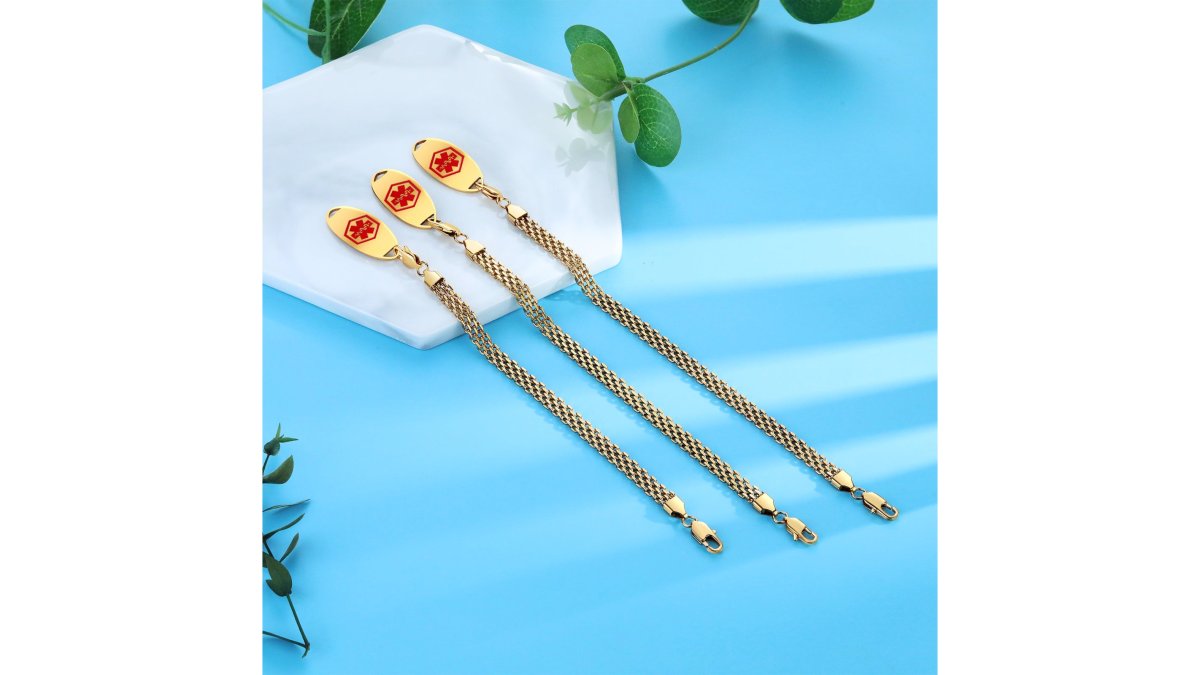
With a medical ID bracelet, the sequence depends on a person noticing it:
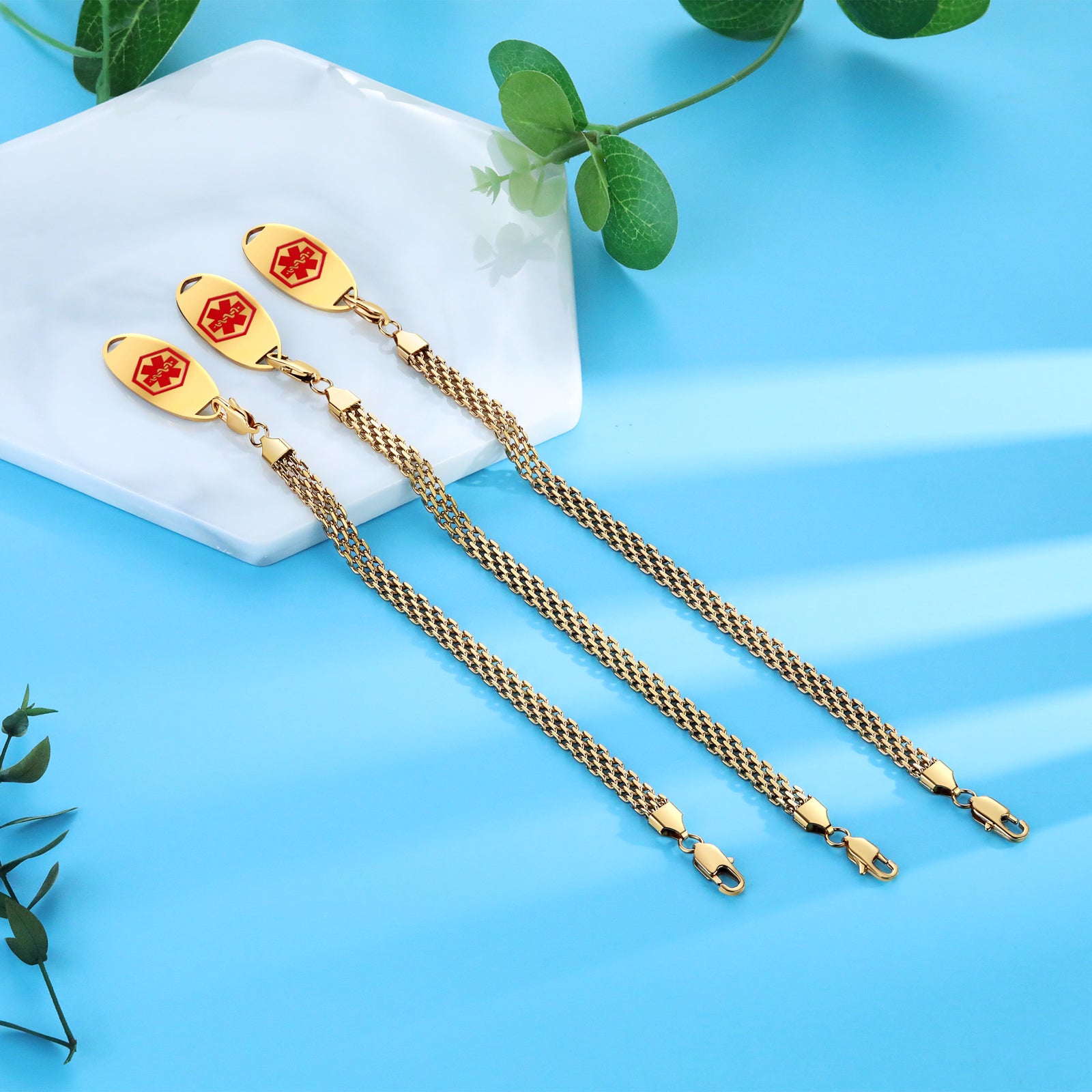
- The wearer falls, has a seizure, or becomes confused or unresponsive.
- Someone nearby, a family member, a neighbor, a delivery driver, a bystander, or a first responder, finds the person.
- That person looks for a medical ID and reads the engraved text or scans a QR code.
- The information shapes treatment: a paramedic avoids a medication the wearer is allergic to, recognizes an implanted pacemaker, or calls the listed emergency contact.
The bracelet itself does nothing, it does not call, beep, or transmit.
With a monitored medical alert system, the sequence starts with the device:
- The wearer presses the help button on the pendant or wristband, or a fall-detection feature triggers automatically if the device offers one.
- The device opens a two-way voice link to a staffed monitoring center through a cellular connection, a landline, or both.
- A trained operator speaks through the device's speaker and asks what happened.
- If the wearer answers, the operator triages, calling a family member, a neighbor, or emergency services as needed.
- If the wearer cannot answer, the operator follows the account's response plan: dispatch emergency services to the address on file and notify the listed contacts.
Where each step can break down
- Bracelet: readability fails if engraving is worn or too small; a QR code fails if the responder has no phone signal or no reason to scan it; a wallet card fails if the wallet is not with the person.
- Alert system: the button must be pressed, which is a problem during a fall that knocks the wearer unconscious; the battery must be charged; the cellular or landline connection must be live; and in-home systems typically only work within range of the base unit, so a fall in the yard or at the mailbox may not connect.
What a bystander can actually do with each
A bystander who finds someone wearing a medical ID bracelet has immediate, offline information, no app, account, or signal required.
The practical takeaway
What Conditions Should Be on a Medical Alert Bracelet
Engraving or linking the right information is the most important part of a medical ID. Responders typically look for conditions that change how they treat a person, so the most useful entries are:
- Serious chronic conditions, such as diabetes, heart conditions, epilepsy, or dementia
- Severe allergies, especially to medications, latex, or insect stings
- Current daily medications, with dosages if space allows
- Implanted devices such as pacemakers or insulin pumps
- One or two emergency contacts with names and phone numbers
The Medical Card from Life Heals Medical Supplies, priced at $10.00, is a wallet-sized card for carrying essential health information. Many families use a bracelet for the most urgent details and a card for the complete record. For complex medical histories, the Personalized Medical QR/Engraving Bracelet at $25.00 links to a fuller medical profile through a scannable QR code.
Medical Alert System Costs and Ongoing Fees Compared
Cost is where these two products diverge most sharply. Here is the honest breakdown of what each actually costs and how to compare them without surprise fees.
Medical ID bracelet: a one-time purchase
Life Heals Medical Supplies bracelets run from $22.00 to $35.00, and the Medical Card is $10.00.
Monitored medical alert system: equipment plus ongoing service
A monitored system is priced in layers, and the monthly figure advertised is rarely the whole story. Expect to see:
- Equipment cost: some providers include the base unit and pendant in the monthly fee; others charge a separate equipment or activation fee up front.
- Monthly monitoring fee: the recurring charge for access to a staffed response center.
- Contract terms: some plans require a multi-month or multi-year commitment, and cancellation before the term ends can carry a fee. Month-to-month plans usually cost more per month but carry no lock-in.
- Add-ons: fall detection, GPS location, and cellular-only service (no landline) are frequently priced as upgrades.
- Return shipping and restocking: worth confirming before you buy, especially if you are trialing a device for an aging parent.
How to compare the two fairly
The mistake is comparing a bracelet's sticker price to a system's monthly price. Compare first-year totals instead:
- Bracelet: $22.00 to $35.00, all in, for year one and every year after.
- Monitored system: equipment and activation (if any) plus twelve monthly monitoring payments, plus any add-ons you actually need. A modest monthly fee multiplied by twelve is the number that matters, not the monthly figure alone.
A useful framing: the bracelet is a fixed cost that buys information; the system is an ongoing cost that buys response.
Questions to ask any monitoring provider before you commit
- What is the total first-year cost, including equipment, activation, and any add-ons?
- Is the plan month-to-month or a contract, and what is the cancellation fee?
- Does the device use cellular, landline, or both, and is there a battery backup for power outages?
- Is fall detection included or an upgrade, and how does it behave if the wearer cannot press the button?
- What is the range of the in-home system, and is there a mobile option for someone who leaves the house?
The bottom line on cost
A medical ID bracelet is one of the least expensive safety purchases a family can make, and its cost does not recur.
Life Heals medical ID product prices
Best Medical Alert Bracelet for Seniors: Which Option Fits Your Situation
Choosing the right product depends on the senior's daily life and the family's support situation. For a closer look at picking the right bracelet for a particular situation, see Which Medical Alert Bracelet for Seniors Is Right for You?. The following options from Life Heals Medical Supplies serve different needs:
- Medical Card ($10.00): Best for seniors who already carry a wallet and need a detailed record of conditions and medications. Skip if: the person needs a visible, wearable identifier.
- Medical Bracelet ($22.00): Best for a simple, durable bracelet with essential details. Skip if: a longer list of information is required.
- Customized Stainless Steel Medical Bracelets ($35.00): Best for personalized engraving in stainless steel with several color options. Skip if: the budget is limited to a basic option.
- Personalized Medical QR/Engraving Bracelet ($25.00): Best for complex medical histories, multiple conditions, or medications. Skip if: the wearer will not use a smartphone to scan the code.
- Upgraded QR Code Medical Alert Bracelet ($28.00): Best for a fashion-conscious wearer who wants a QR code linked to more information. Skip if: the person needs a device that can call for help.
If the senior lives alone and has fall risk, a medical ID bracelet should be paired with a monitored alert system, not used instead of one. Life Heals Medical Supplies focuses on medical identification jewelry and related supplies.
Choosing and Maintaining Your Medical ID Bracelet
When choosing a bracelet, check the size and fit so it stays on during daily activity. Confirm the engraving has space for essential information and that the stainless steel holds up to everyday wear. You can also see how to put a medication list on a bracelet step by step.
To maintain the bracelet, inspect the clasp regularly and replace it if it loosens. Keep a copy of the information on the Medical Card in a wallet or purse so responders can find details even if the bracelet is removed.
Booking Your Next Step: Choosing the Right Medical ID at Life Heals
If a medical ID bracelet fits your situation, the Life Heals Medical Supplies catalog offers options at each price point, from the $10.00 Medical Card to the $35.00 customized stainless steel bracelets. Start by listing the conditions, allergies, and medications responders most need to know, then choose the product that fits that information. Life Heals Medical Supplies accepts credit card payment only.
Frequently Asked Questions
Do EMTs really look for medical alert bracelets?
Many emergency medical technicians check for medical ID jewelry, especially when a patient cannot speak for themselves. A bracelet engraved with a condition, severe allergy or daily medication gives responders a fast starting point. Because a bracelet has limited space, keep the engraving to the most critical details and pair it with a fuller record, such as a Medical Card in the wallet or a QR code linking to a medical profile. Keep it visible and in good condition, because an ID that is missing or unreadable cannot help.
Which is better, a medical alert necklace or bracelet?
A bracelet is usually easier to spot on the wrist during a check of vital signs, which is why many responders look there first. A necklace can work well for someone who finds bracelets uncomfortable or catches them on clothing. Life Heals offers the Customized Stainless Steel Medical Bracelets at $35.00 and the Upgraded QR Code Medical Alert Bracelet at $28.00. Choose the style the wearer will keep on every day, because an ID that is left in a drawer does not help in an emergency.
Does Medicare cover medical alert systems or medical ID jewelry?
Check the current coverage details directly with Medicare at medicare.gov or with your plan before assuming any cost will be covered. Life Heals Medical Supplies accepts credit card payment only and does not process insurance, so plan your purchase accordingly.
What is the main difference between a passive medical ID and an active alert system?
A passive medical ID, such as a bracelet or card, communicates health information to anyone who reads it, but it cannot summon help. An active medical alert system includes a button or device that connects the wearer to a monitoring service that can call for assistance. A medical ID does not replace an active system for someone who may fall or become unable to call out, and an alert system does not tell responders about allergies or medications unless that information is set up with the service.
